The Last of Spring
The glowing petals of sakura line up one by one along the riverbanks. Gradually the trees transform into vivid canopies of green. The temperature rises, the wind shifts, and suddenly haru ichiban blows through the valley — that first strong wind of late winter that awakens everything. The nanohana carpets the riversides in bright yellow. Then tulips, daffodils, narcissus, and a plethora of wildflowers join in riotous bursts throughout the landscape.
The Rain Arrives
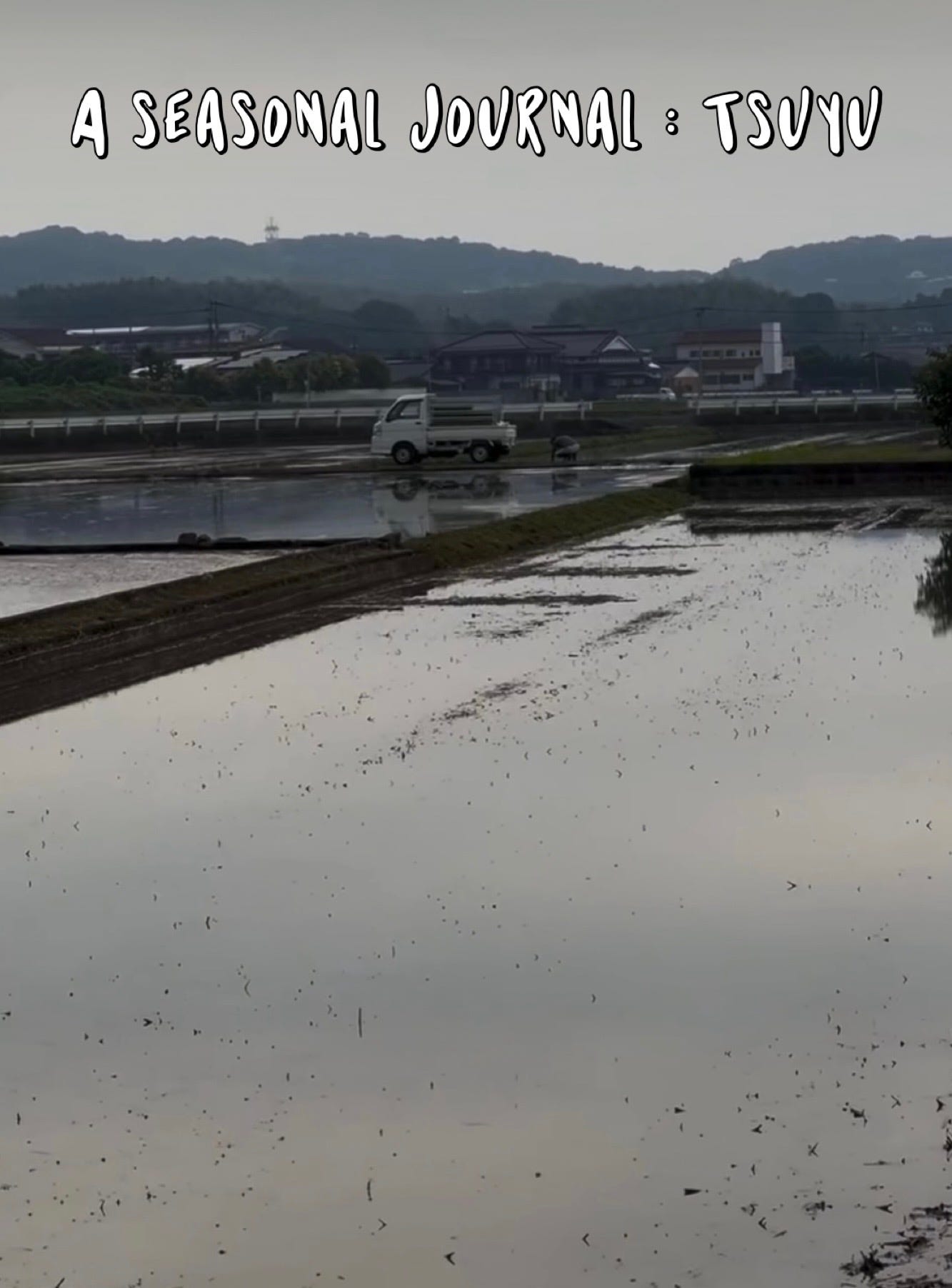
And just as we are breathing into warm air and sunshine… the first drops begin to fall. At first just a few grey clouds drifting through. A few showers that don’t sodden the whole day. Then the intensity builds. Blue skies are no longer visible. Looking upward the skies are thick with layers of varying shades of grey. Thunderstorms wake us during the night.
And then comes the official announcement — because in Japan, tsuyu is officially announced. It’s almost ceremonial. We make sure that we have the necessary equipment. Umbrellas, rain boots, small towels tucked into bags to dry off with. Tsuyu has arrived. Spring colors have diluted into grey puddles.
As rice farmers we welcome the rain as a necessity. And that part of it I love. The rich, strong, earthy smell of wet black mud in the fields. It brings the frogs with their symphonies. The duck families return. Water gliders skid around puddles. The dragonflies return. Flocks of swallows cruise low over the fields collecting mud for their nests. It’s amazing to watch them- precision twists and dives into the fields and seconds later they come racing straight up again.
We were blessed one year to have a family of tsubame build their nest right outside our genkan. We fought snakes and karasu — those huge black crows — to keep the babies safe. The second year they returned, but no matter what we did we couldn’t keep the predators away. The nest was destroyed and they never returned. The cycle of life.
The smell of rain clings to everything.
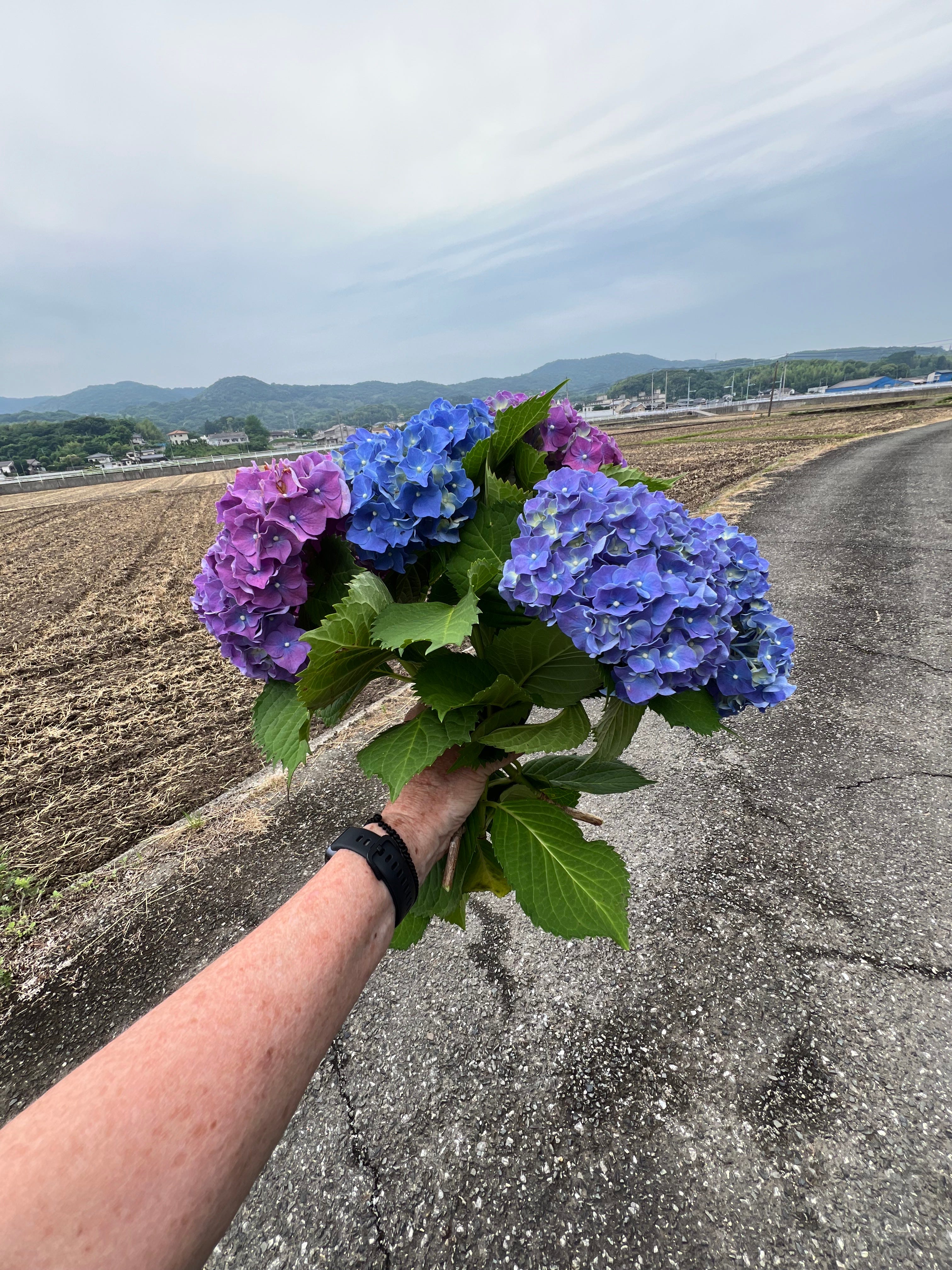
It’s also ajisai season. Big bright bushes of hydrangeas in vivid purples, blues, and pinks absolutely pop against the grey background. Thriving on roadsides, in gardens, interspersed among the hedgerows and gardens. They are absolutely my very favorite flowers and they bring such cheer to the season.
The Laundry Dilemma
There is one battle that every household fights during tsuyu — drying the laundry. Clothes dryers are not common in Japan. Newer washers have a built-in drying function but it takes two to three hours and uses a lot of electricity. Our washer is an older model, which means I hang the wash inside the house every day. Japanese washing machine capacity is small and almost everyone washes daily. Families with children wash several loads. No choice — coin laundry is expensive. Drying laundry in a humid house is a real challenge. I never feel like anything completely dries. My solution is to wash at night and hang everything in the tatami room where we sleep, with the AC running. Most things are dry by morning. The rest I just leave until they are.
It’s a challenge!
Taue — Rice Planting Season
Many people think of rainy weather as a time to cozy up with a book and a nice mug of coffee or tea. Not here. The rainy season continues to slip and slide right into taue — rice planting.
When June rolls in everyone is paying attention to the weather. Watching the sky for those big grey clouds. Praying for rain to fill the reservoirs and irrigation canals. We need to get the seedlings into the ground by end of June because they take about 130 days to mature. By then the temperatures are rising and will help the seedlings establish and thrive. It’s also important because typhoons typically arrive around the end of September or October. Although now, climate change has thrown a monkey wrench into things and we are experiencing earlier storms. When that happens the fields are in danger of being flattened — and we have to get out there with hand tools and harvest manually. The combine can’t harvest flattened rice.
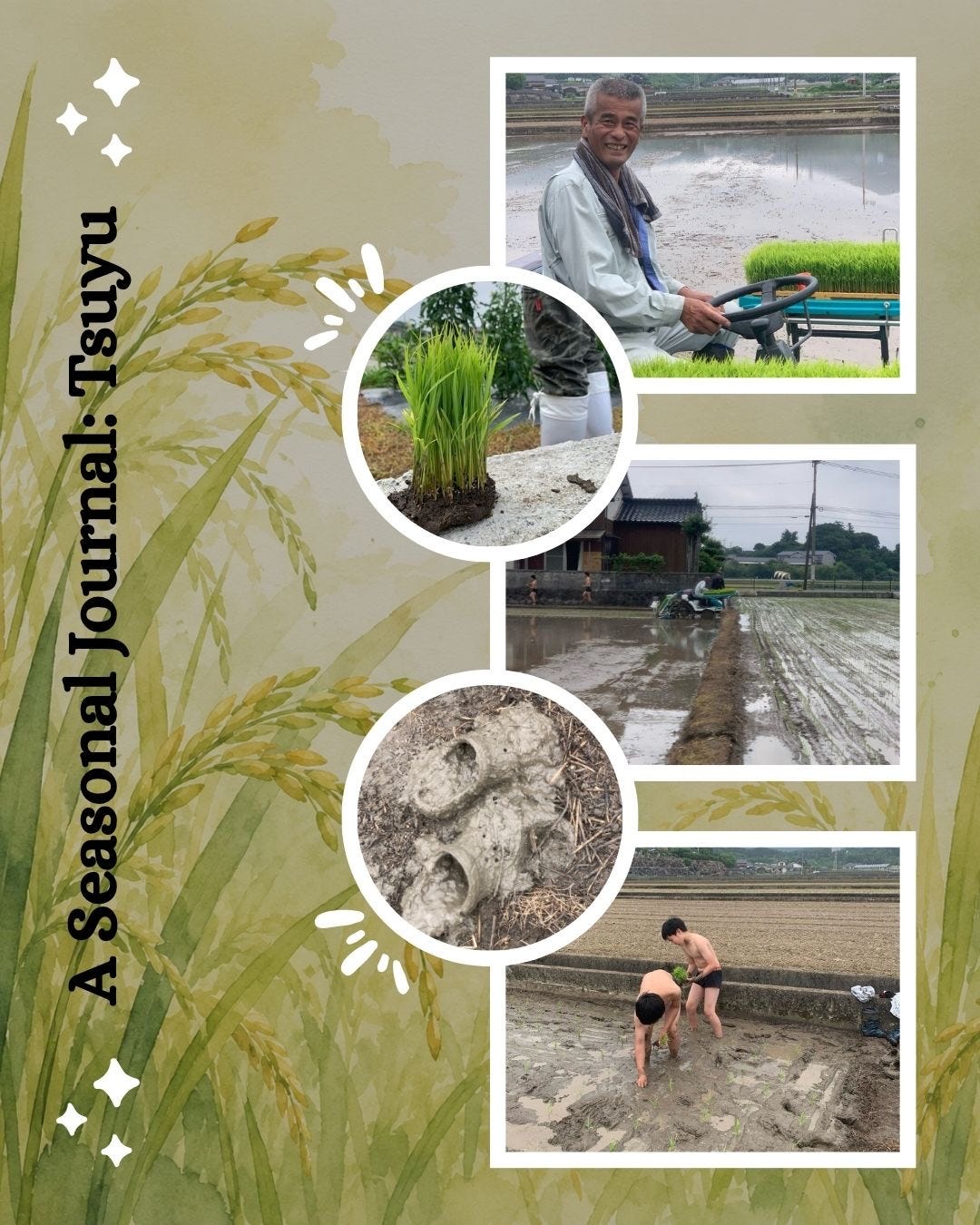
But before we can even think of planting there is a lot of preparation that needs to be done. The irrigation canals need cleaning. Trash,(unfortunately yes, there is trash that gets into the canals) algae, leaves and other natural debris- that all needs to be cleaned out. The lanes are cleaned up- weeds are pulled and general grass cutting happens. The seedlings need to be ordered, machinery is readied.
My Father-in-Law’s Fields
It was my late father-in-law who taught me about rice planting. We lost him three years ago and miss him dearly. This season holds so many memories. He always let me drive the planting machine. As his Parkinson’s disease progressed I used to wheel him over to the fields and together we’d watch the activity. He’d shake his head and complain that my brother-in-law couldn’t keep a straight line while driving the planting machine — then he’d turn his head and wink at me and say — you should be driving. I’d kiss him on the forehead and say… I’m your driver now.
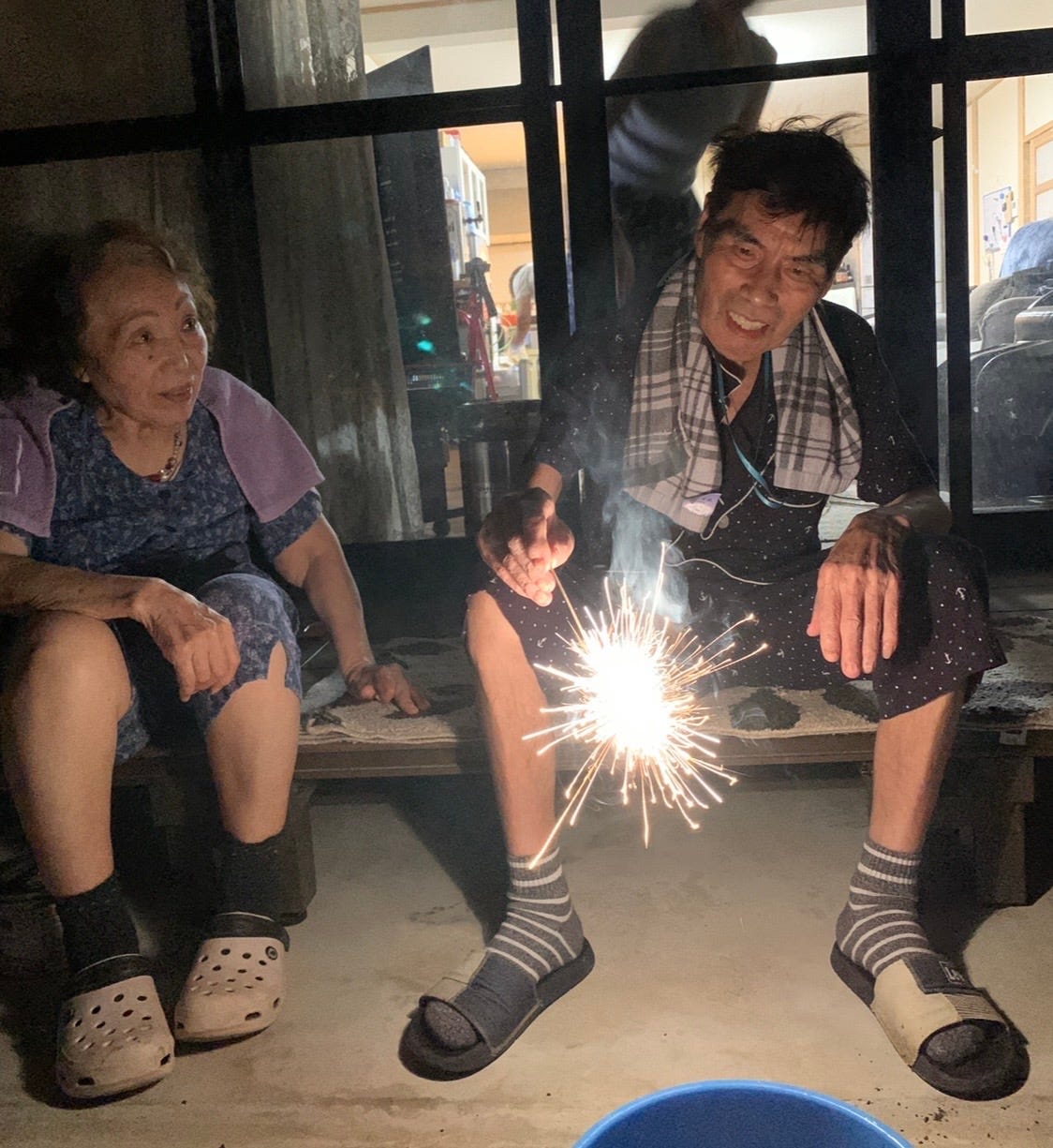
My mother and father in law many years ago.
My brother-in-law has taken over as “rice boss”— which is fine, he does well. His driving got better (haha). Me, I just love waking up early on planting day. The night before I get my gum boots, hat, farm pants, shirt, and bandanna out and set them by the genkan. Kind of like a kid expecting Christmas. My job now is hand planting the corners of the fields — those parts that are hard to reach with the machine. I swear sometimes I can hear my father-in-law’s voice while I’m knee deep in mud.
Planting Day
Everyone shows up and we always have way more help than we need, but that’s okay. At lunchtime we break for onigiri or store-bought bentos and cold tea. The camaraderie is wonderful. All of us sitting around under a pop-up tent on plastic chairs, empty crates, whatever is available. Boots covered in mud, sweaty, hair plastered to our heads, grinning and laughing and just enjoying the day.
My brother-in-law thinking about that cold “nama biru” (draft beer) he’s having after the work is done.
That evening, after a good shower, a hearty dinner and a nama biru everyone gets a good night’s sleep.
Planting is done. But that’s just the beginning. As tsuyu gradually comes to an end, the temperature rises and the seedlings take root and begin to grow as we roll on into summer.
From the Tsuyu Kitchen
Tsuyu calls for simple, cooling food — things that don’t take long to prepare. Here are a few things from our table this time of year.
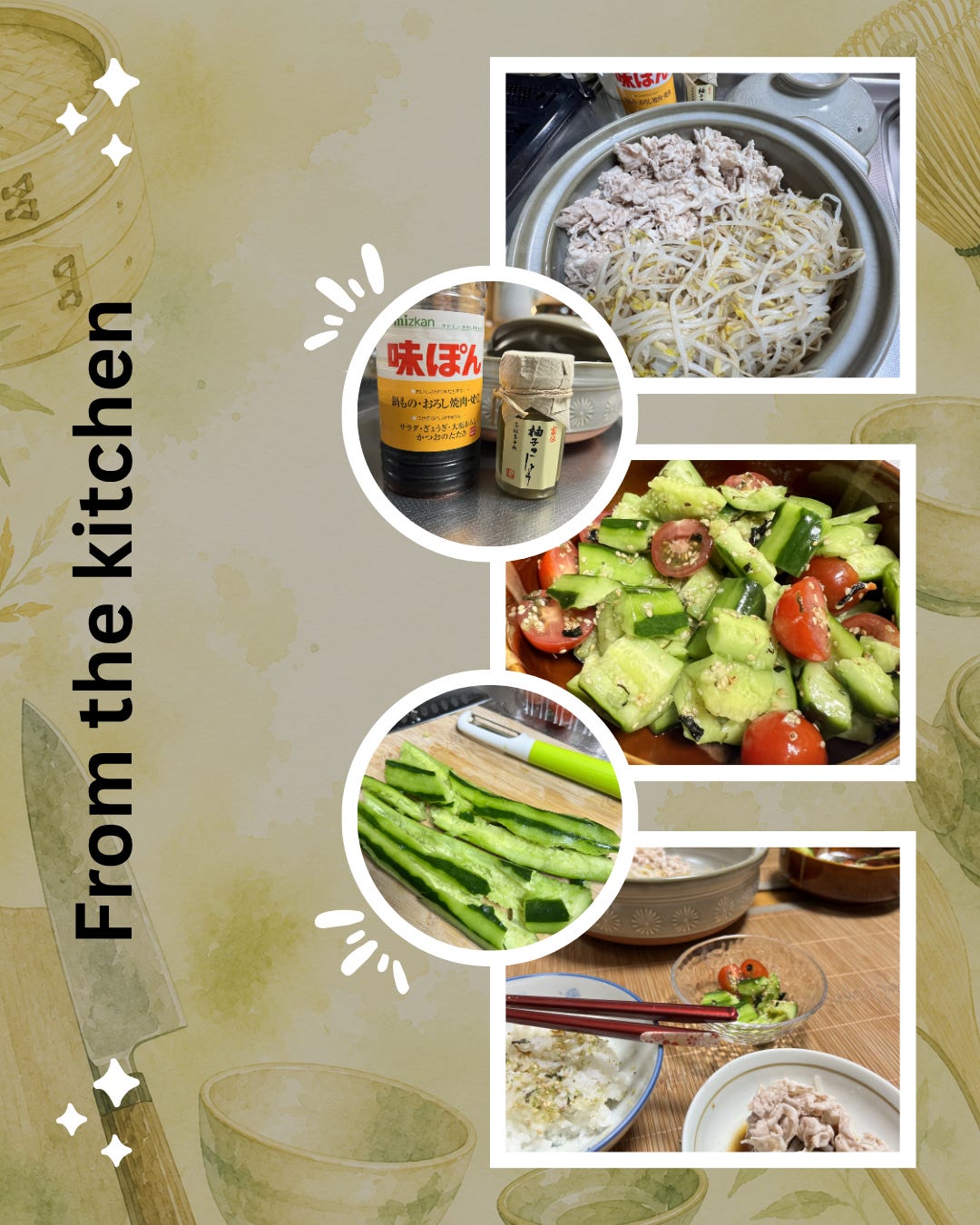
Smashed Cucumber Salad
Wash and peel your cucumbers leaving stripes of skin. Lightly pound with a kitchen mallet or press with a plate until cracked open. Roughly cut into bite-sized chunks. Add chopped cherry tomatoes. Toss with a light vinegar and oil dressing. Finish with a generous sprinkle of seasoned seaweed salt and mix everything together.
A pinch of furikake or toasted sesame with a little salt works beautifully as well.
Furikake is a dry Japanese seasoning blend meant for sprinkling — the name literally means “to sprinkle over.” It typically contains dried seaweed, sesame seeds, and salt. You’ll find it in every Japanese kitchen, usually sitting right next to the rice cooker!
Cold Pork and Moyashi
Boil thin slices of lean pork. Rinse in cold water and drain in a colander. Parboil the moyashi (bean sprouts), drain and leave to cool. Arrange both together on a large plate or bowl.
Dipping sauce: ponzu and yuzukosho.
Yuzukosho (柚子胡椒)
Is a paste made from yuzu citrus peel, green or red chili peppers, and salt. It’s fermented slightly which gives it a complex, punchy flavor — citrusy, spicy, salty all at once.
Don’t forget the nama biru!
Stay tuned for the next article in my Seasonal Journal Series!


No comments:
Post a Comment