
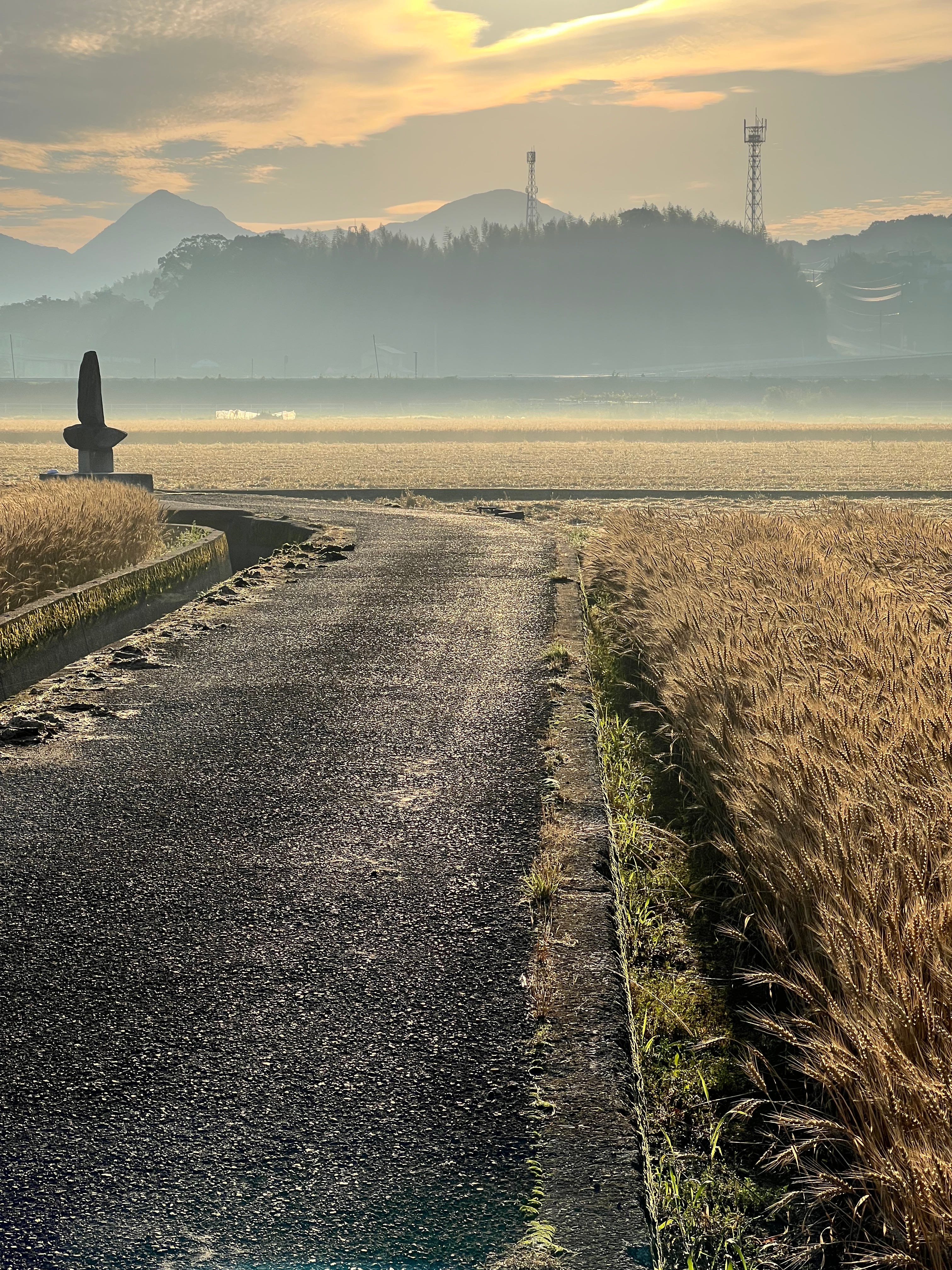
I didn’t know her name then. I walked past and offered a gentle “konnichiwa” or whatever was appropriate for the time of day.
As the seasons turned and the years went by, I realized she couldn’t make it to the stone anymore. The playground bench was as far as she’d go now. She’d sit in her floral jacket, canes leaning beside her, watching the fields she could no longer quite reach.
Sometimes another granny would be sitting with her. Big sun bonnet, small frame. The two of them side by side like something out of a painting — the kind that makes you feel peaceful and a little sad at the same time.
They both watched me every time I passed.
I’d been living in this little village a few years by then — in the tiny home we inherited — and honestly, I hadn’t made many friends. Not for lack of warmth on anyone’s part. Japan is kind. But it’s also private in a way that takes some getting used to. Friendships here grow between people who’ve known each other since childhood, or sat beside each other in the same community class for twenty years. Even Japanese people will tell you — making friends here is not easy. You learn to be content with pleasant and surface. You find companionship in the fields and the dragonflies and the slow turning of the rice and the serenade of frogs.
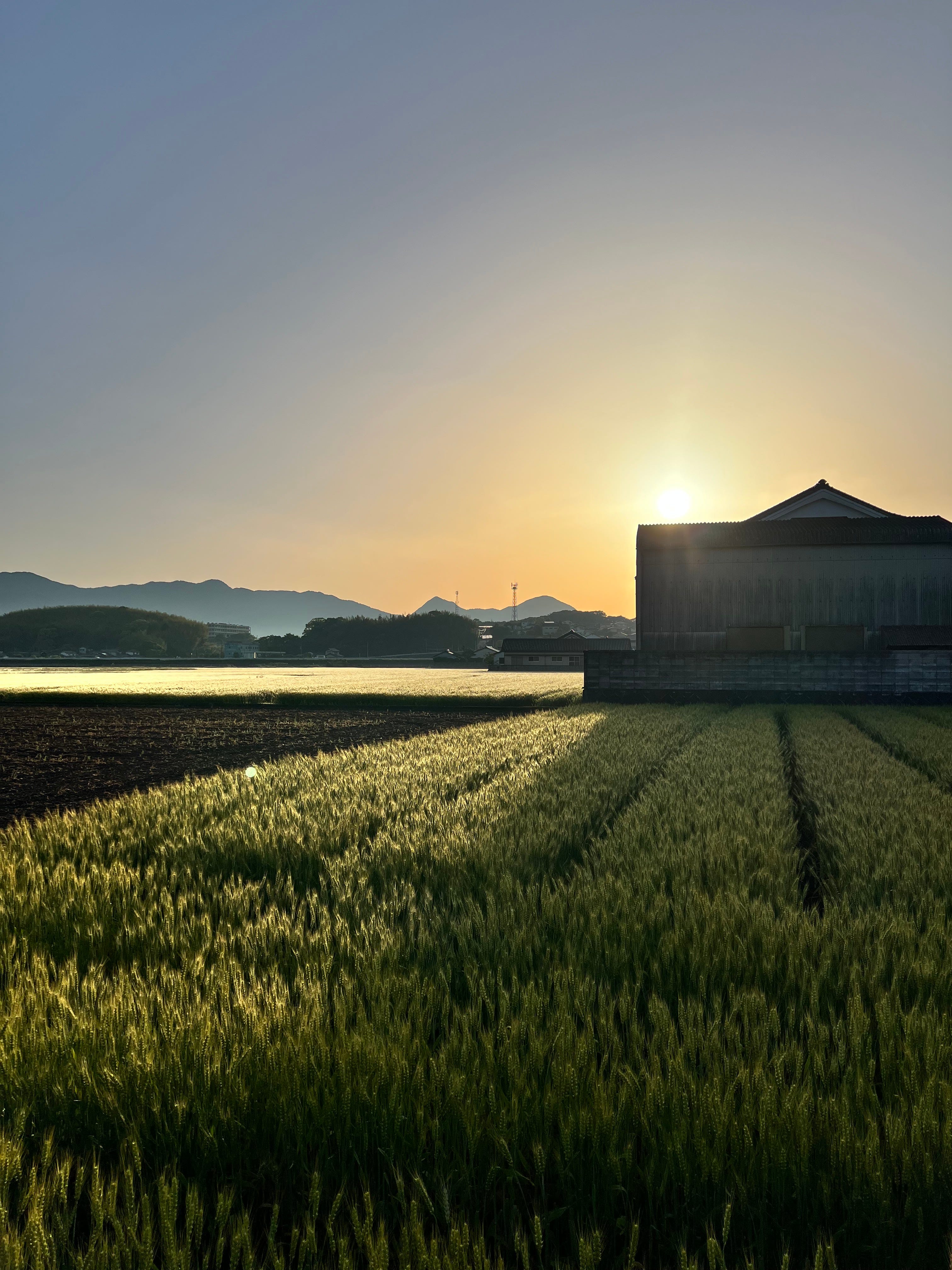
The two old women sat on the playground bench and watched me walk past — I noticed, but I didn’t do anything about it. Not for a good long while.
Then one day I waved.
A small wave.
And they waved back.
After that it became our little ritual — I’d pass, we’d wave, I’d carry on. Until one late afternoon they beckoned me over, that unmistakable come here, come here gesture, patting the bench. They had scooted over to make room for me.
My heart was racing… I was sure they didn’t speak English so that would mean I’d have to speak Japanese- which I wasn’t very good at.
I sat down. They had so many questions.
Where are you from? Do you live here? How long? Your husband — is he Japanese? Really! Where did you both live before you before?
The same questions every visit. I came to know them like a familiar song. I’d answer carefully, apologize for my poor Japanese. They’d wave it away with great enthusiasm — Oh no, your Japanese is wonderful! We all knew it wasn’t true, and somehow that made it warmer.
This went on for a couple of years.
Then the other morning — early, maybe 8:30, mist still on the fields — I came around the corner and there was Haruko. Alone on the yellow bench. No sun bonnet beside her.
She waved me over.
But she didn’t ask me any questions this time.
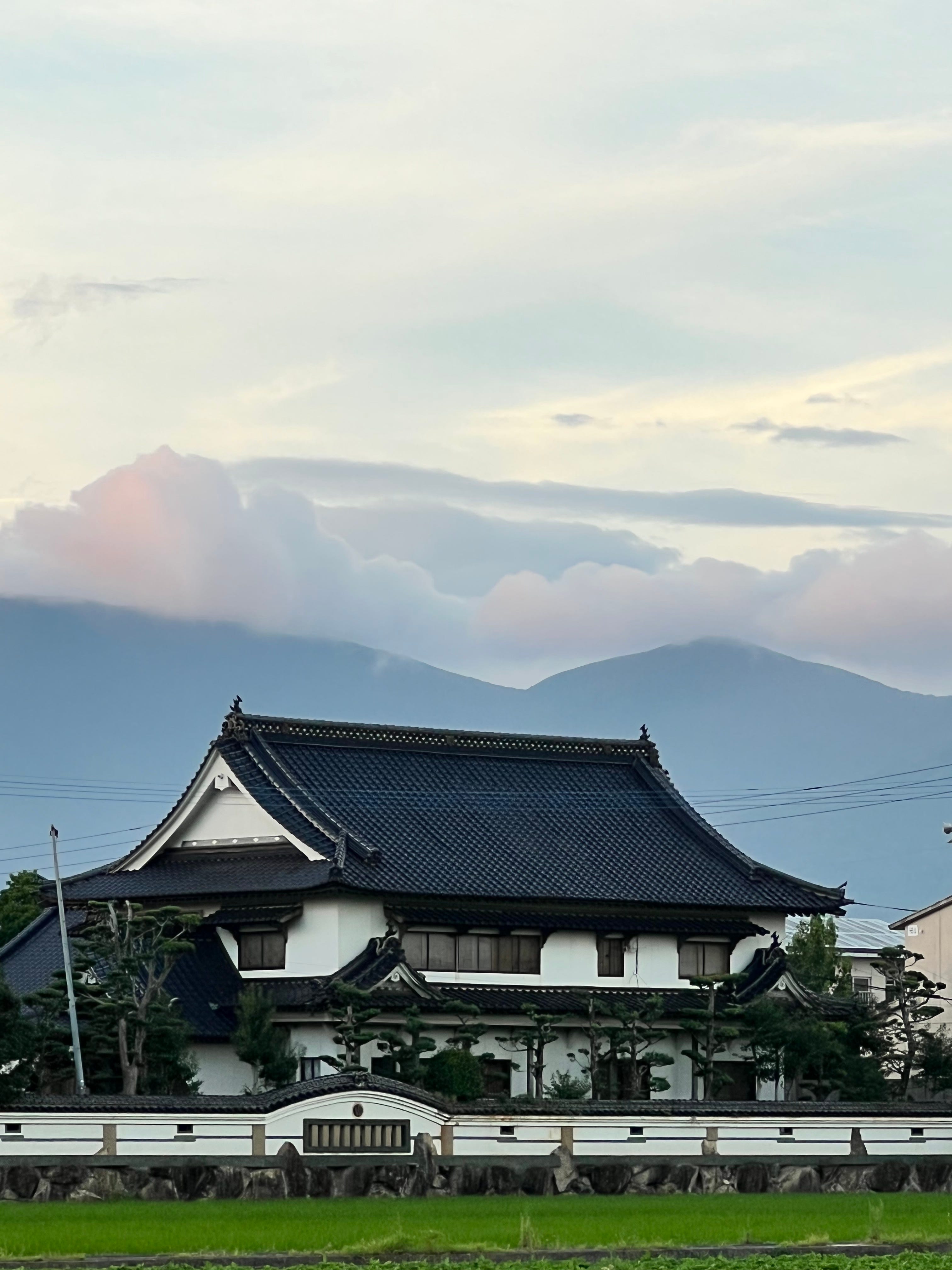
She began to point. That ancient two-story with all the buildings attached — a friend had lived there. The one leaning on its little addition just to stay upright — another friend. The farmhouse with the big vegetable garden and the sweet little orchard. One by one she pointed, and one by one she told me. All gone now. All of them.
She cried. Quietly. And she said she was so lonely.
I didn’t think about it. I just put my arm around her shoulders and held her close, the way you’d hug a long time friend. She leaned right into me, this tiny woman, and we sat there together in the morning air.
She talked. I listened. She poured out memories the way people do when they’ve been holding them a long time and someone finally sits still long enough to receive them.
Eventually I said goodbye and walked on down the lane into the fields. And I couldn’t stop smiling.
I’d come out that morning just to walk. But God had other plans — a lonely soul who needed a shoulder, and it turned out, so did mine.


No comments:
Post a Comment