Monday, 6 July 2026

Hydrangea Magic


I love hydrangeas! Before we moved to Japan I’d only seen them in photos. 

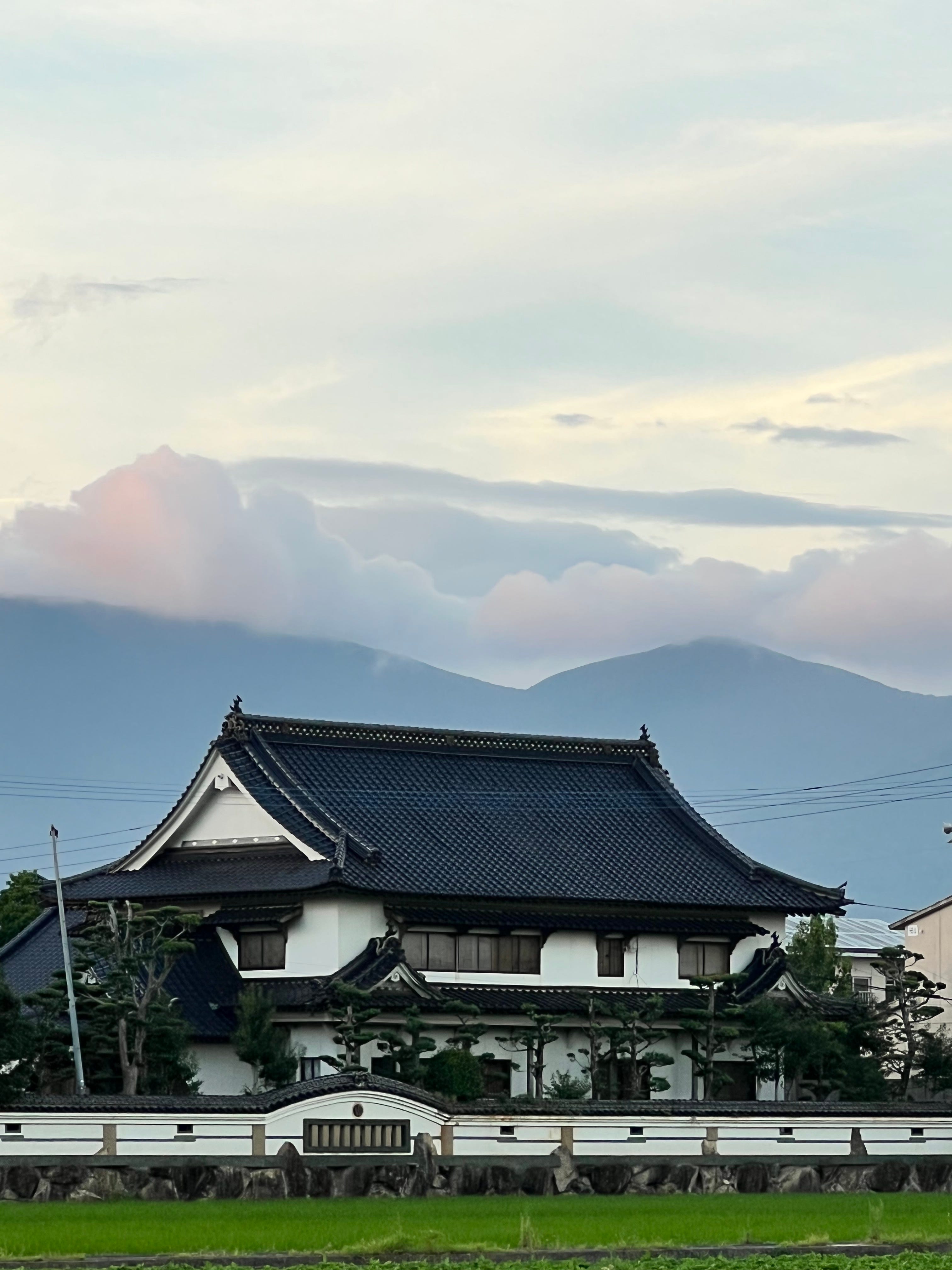
We rented an old traditional Japanese house when we first moved here. The garden was a total disaster. It took me a few months of chopping, digging and hauling to see what it was that I actually had to work with. In the front and back of the home were bushes. I cut them back but I had no idea what they were. 

The hydrangeas at our first house in Japan. 

And then came spring! The bushes began to grow rapidly and I noticed …buds! Curious, I checked them every day until, to my astonishment, huge pink and blue flowers began to emerge! Giant puffy heads of brilliant flowers that looked luminous against the grey skies of the rainy season. 


Ajisai- hydrangeas! I couldn’t help but fall in love. I saw them everywhere. Along riversides, they dotted the mountains and grew in the hedges. 


Hydrangea season is also the beginning of the monsoon season in Kyushu. Along with the rains and hydrangea come the fireflies. Because we live in a beautiful mountainous region where there are plenty of rivers of pure fresh water- fireflies thrive! 
Firefly sanctuary

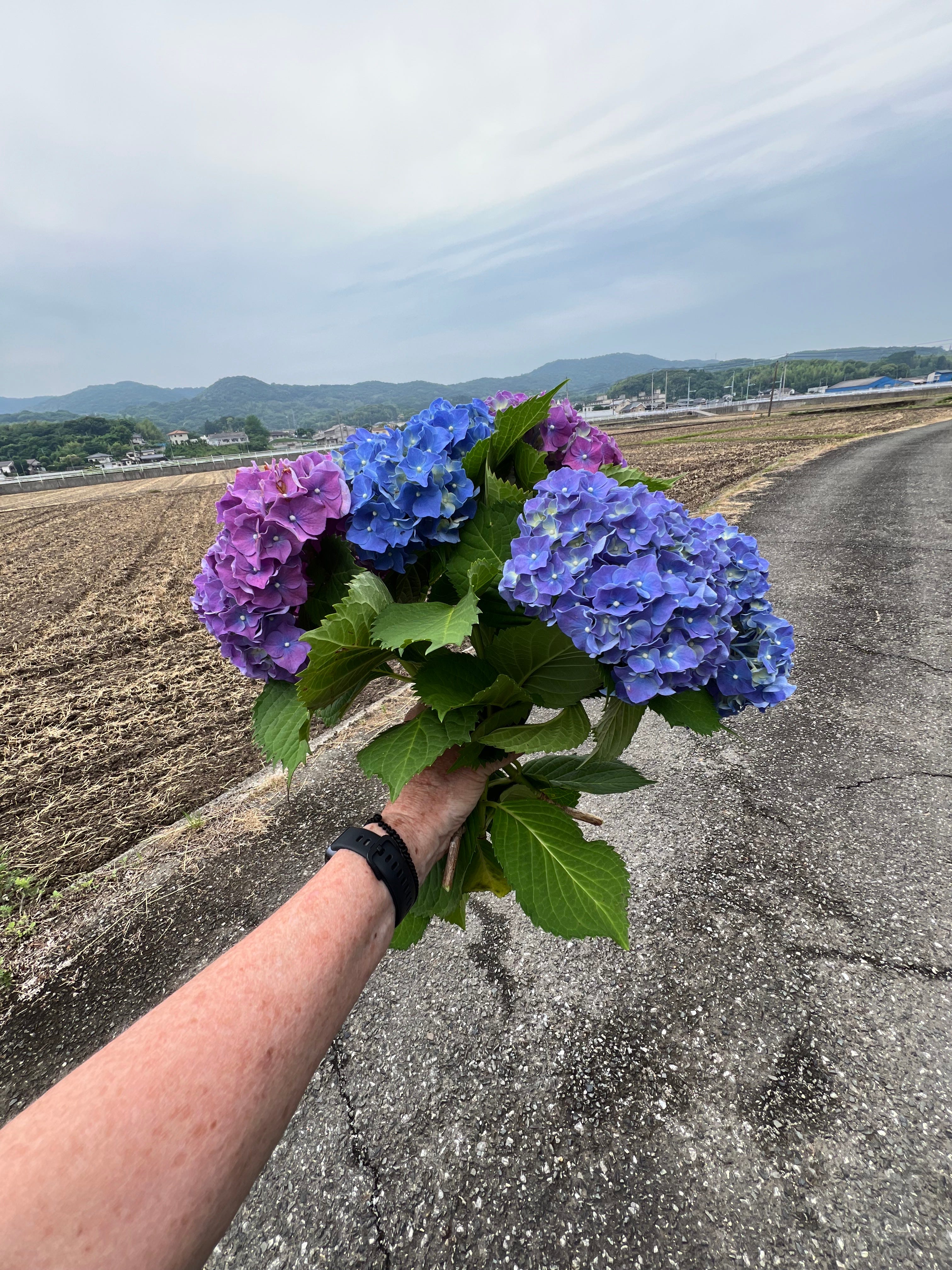
The hydrangeas seem to be dwindling now. The season is almost over. But I have some lovely memories of them this year. 


I look forward to the season again next year! 


The Butsudan and the Honke

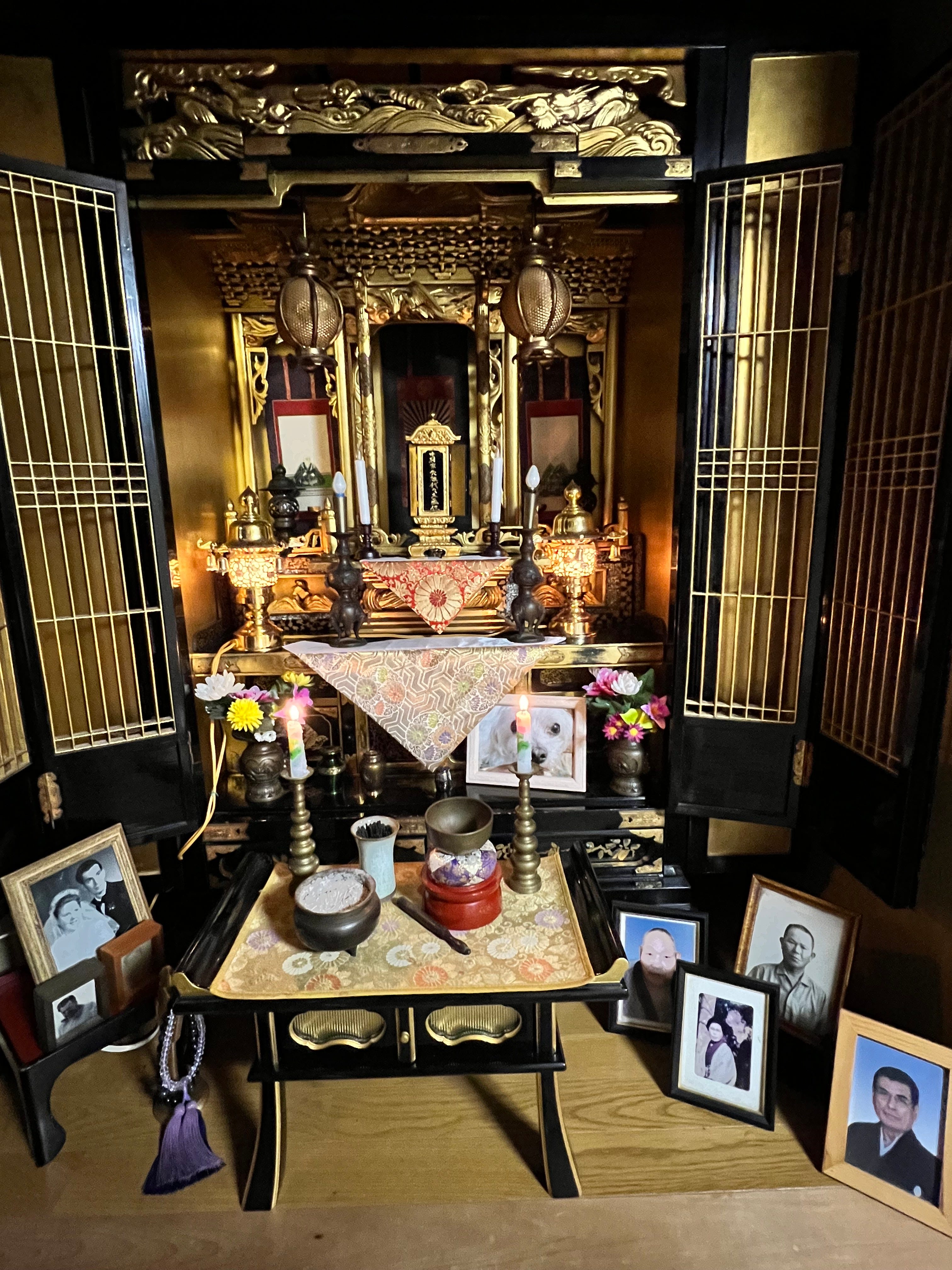
 There is an old butsudan in our tatami room.

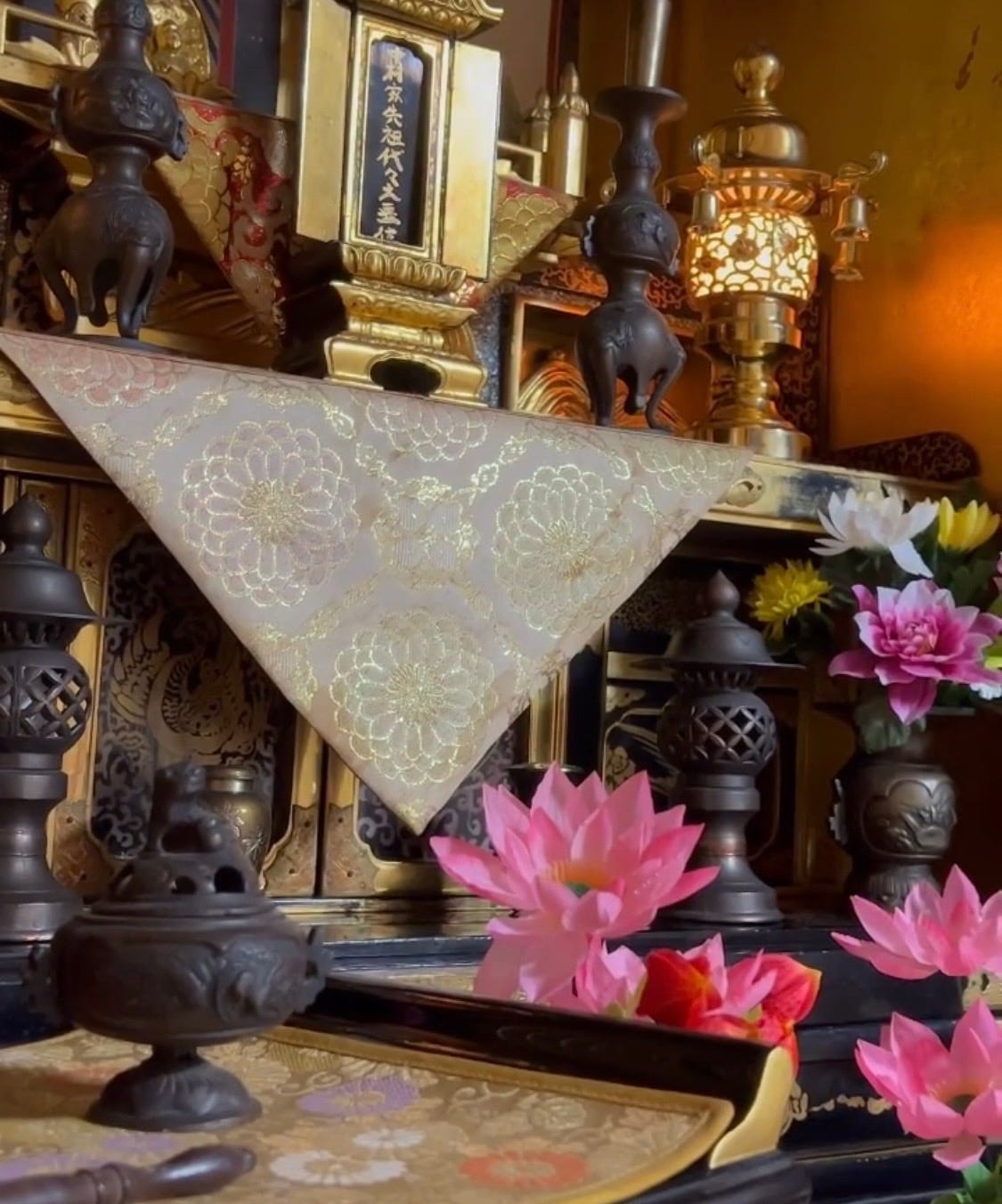
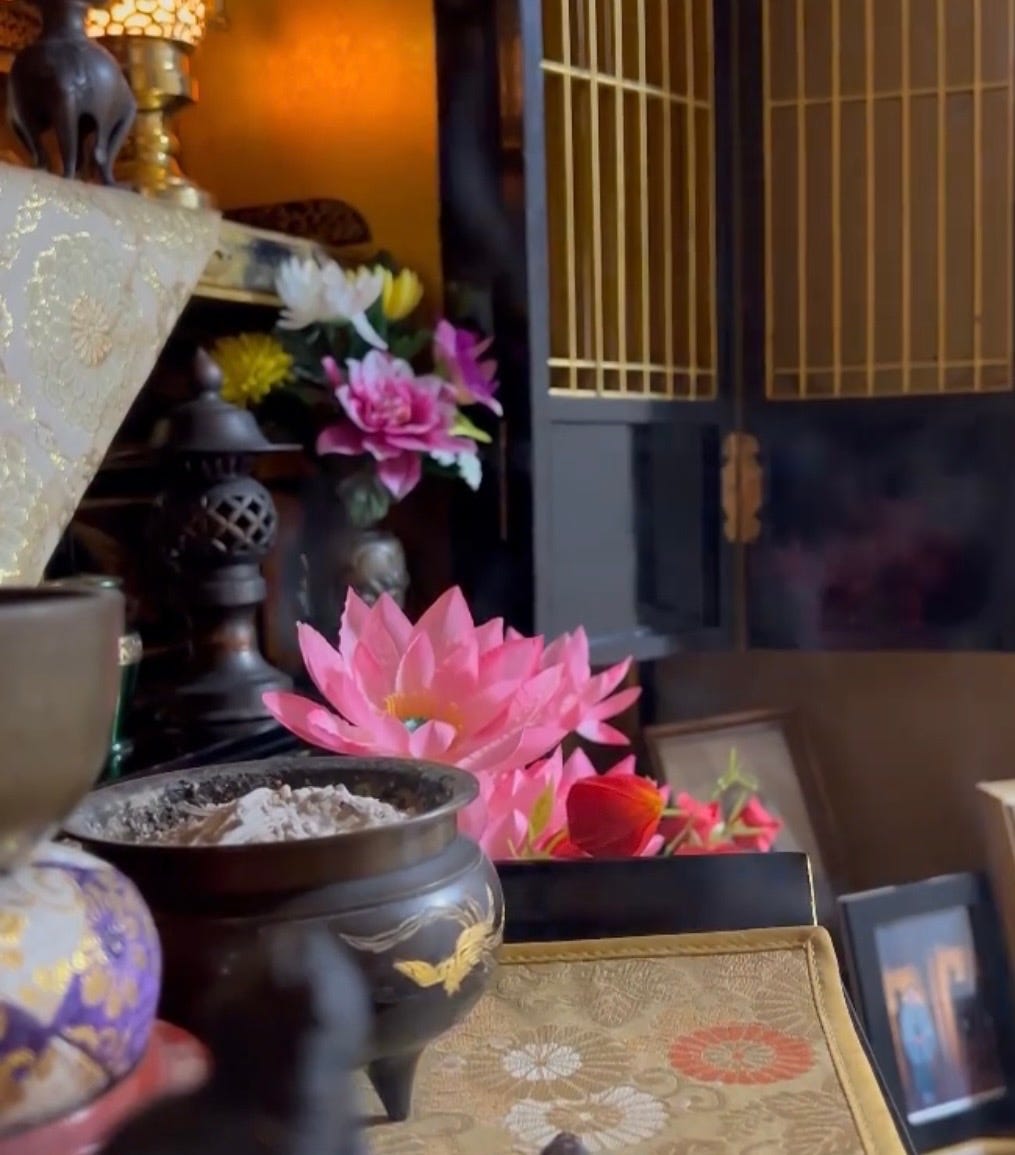
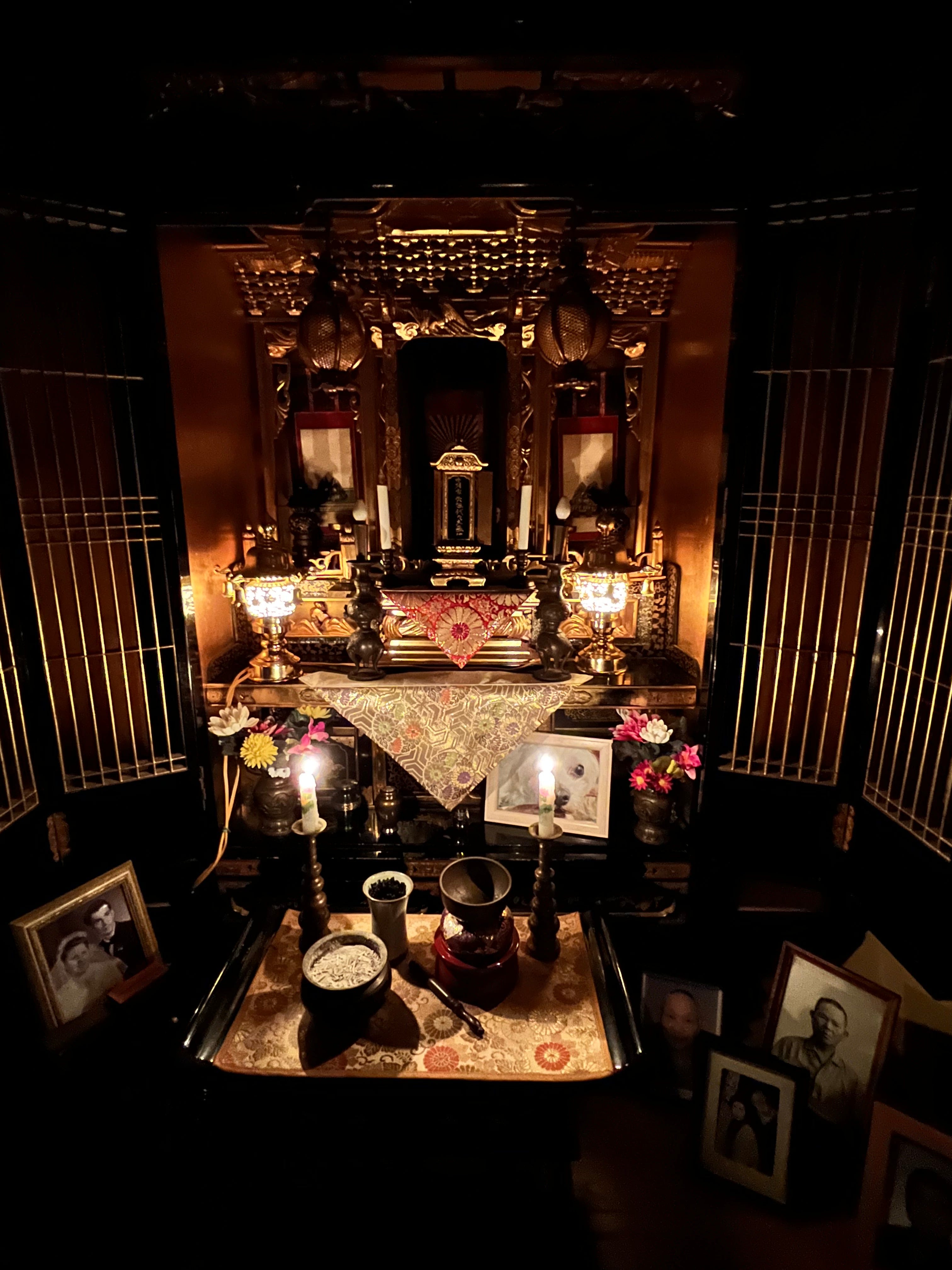
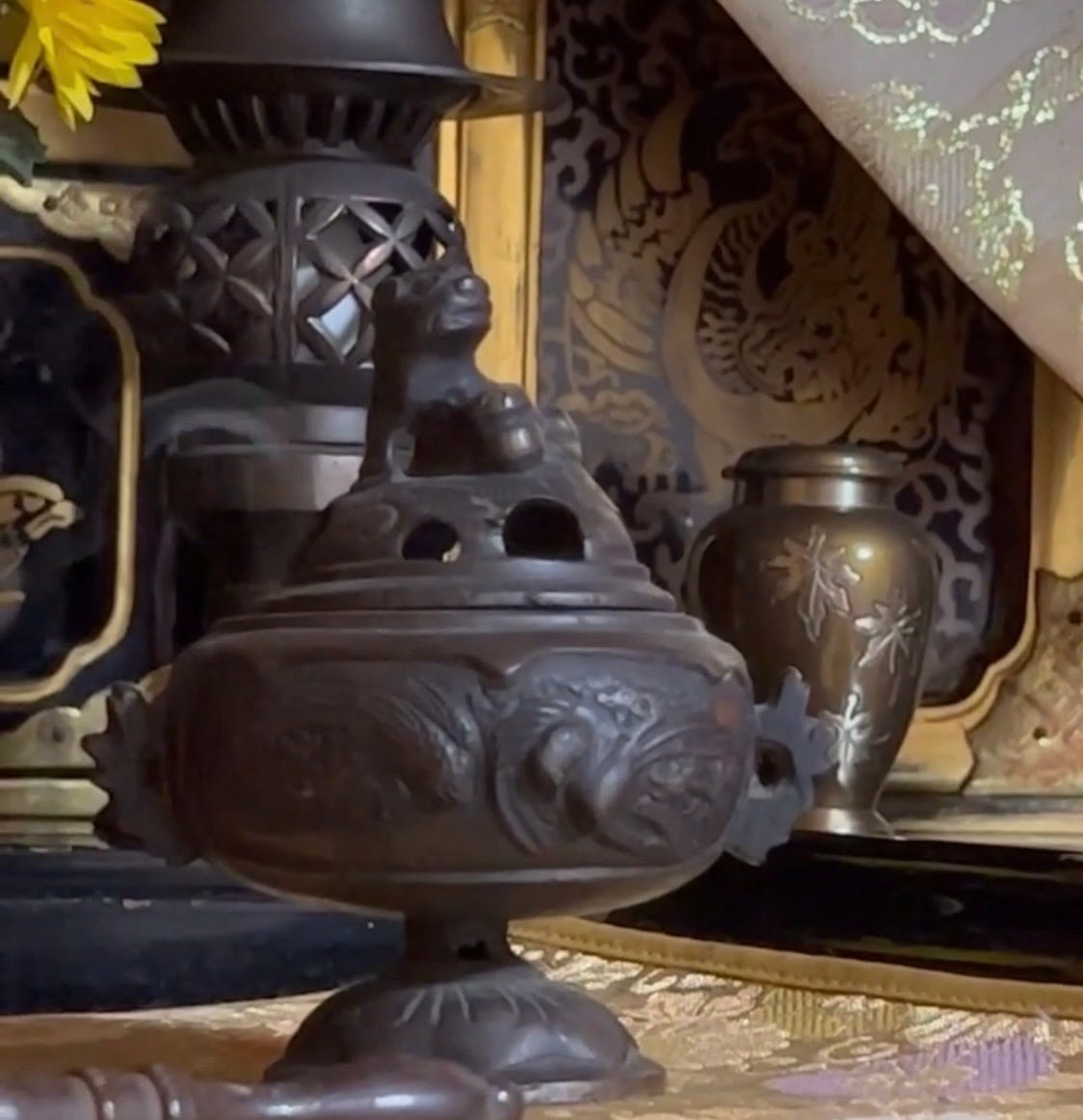
It is over one hundred years old. Black lacquer and gold, needs to be carefully carried by two or three men. Its doors are always open. Inside, the ihai tablet sit at the center. Candles, an incense burner and a small brass bell sit on a small black lacquer table. Fresh flowers adorn both sides. Photographs of the ancestors are arranged around the base, including our beloved dog.

I have spent years carefully dusting it and was always curious about the history of such an interesting object. I finally decided to do some research.

It is a traditional Kin Butsudan— 金仏壇 — a Golden Buddhist Altar adorned with black lacquer exterior and genuine gold leaf interior. Handcrafted by master craftsmen during the Taisho era, somewhere between 1912 and the early Showa years. The interior is built to represent the Pure Land — the Western Paradise of Jodo Shinshu Buddhism. The carved “ranma”at the top used for ventilation, the inner palace roof structure, the hanging lanterns all mirror the architecture of a Buddhist temple.

A Butsudan like this is a collaborative work — woodcarvers, lacquerers, gold-leaf specialists, each contributing their skill. The gold leaf has now aged to a warm tone. I used to think it was gold paint.

The honke — 本家 — is the main family household. It is the ancestral home, including the rice paddies, the vegetable gardens, and the family’s own section in the local cemetery. Generally, the eldest son took over the honke and with it the responsibility of caring for his parents as they aged. The honke remained the center “pillar” from which branch families called bunke, revolved around.

When ancestors passed on they did not leave the honke. The ancient belief is that the ancestors became the guardians of the household. They watched over the living from inside the butsudan. They protected the family and the land. Ancient Japanese believed that the ancestors were first and foremost the household’s guardian deities, kami, who watched over and protected the honke and all it encompassed.

Called Senzo-kuyo — ancestor veneration. More than just a religious custom. It is a reciprocal relationship. A daily relationship between the living and the dead.

I watched my mother in law offer incense, fresh water, the first scoop of rice from the morning pot. She did this every morning without fail. She chanted the Nenbutsu over and over while fulfilling the morning ritual- Na-man-da, na-man-da. A shortened version of the longer form.

In return, the ancestors watch over the household, protecting the land and the family.

This is what was literally believed and still believed by the elders. The spirits of the dead, through years of careful tending, gradually purify and rise. They become ujigami — ancestral guardian kami. They remain in the Butsudan.

The butsudan is not a memorial. It is a dwelling.

Only the honke kept a butsudan. The main house held the ancestors — literally. The branch families did not have an altar. The honke was not simply where the family lived. It was where the ancestors continued to reside.

During the Edo period this custom was formalized. Every family was registered to a temple. The honke was expected to maintain the altar, invite the priest, mark each ancestor’s death anniversary. The butsudan was not optional. It was the center of the household’s identity.

In my husband’s family a tragedy occurred. They lost the honke.

My husband’s grandfather was the mayor of his local area for many years. He was well respected. Not only as mayor but also as village chief. His estate was the honke — the rice paddies, the gardens, the family graves, the butsudan.

His oldest son — the chonan, the heir, the one the whole system was built around — lost it. He made a bad business deal. He used the honke as collateral. Unbelievable, I know. The honke was gone. My husband’s grandparents, the mayor and his wife, were forced to relocate. The only thing they could afford was a tiny 500 square foot dwelling. Everything was gone. They carried the butsudan with them and continued on the best they could.

The two younger brothers had their own families by then. They moved on. Grandmother passed away.

And when grandfather died, someone had to take the butsudan.

None of the brothers wanted it. I don’t know the details. My mother-in-law stepped forward. She carried the butsudan to her home and cared for it.

Eventually the butsudan came to us. To her oldest son. My husband.

So here it sits. In our tatami room. In a village in rural Fukuoka. The same altar that stood in the mayor’s honke. Survived everything. The bad deal, the lost house, the 500 square foot dwelling . Carried forward by a woman who was never supposed to be the one carrying it.

My husband says the old way of life in Japan is dying. And he doesn’t just mean the tradition of the butsudan.

He means the whole thing. The honke at the center of the village. The bunke families fanning out around it. Knowing your place in that web — as an identity. You knew where you came from. You knew who you were responsible to. You knew where you would be buried.

That world is almost gone.

It is estimated that there are nine million empty homes in Japan now. Many of them were someone’s honke once. The rice paddies now go unplanted. The graves are left untended. The fields gone to weeds.

People from outside Japan say they love Japanese culture. And I understand that. There is much to love.

But this is also Japanese culture. The empty honke standing forlorn in a tangle of weeds. Tatami rooms rotting away. Butsudan covered in dust and mice droppings. In some old homes the faded photos of the ancestors are still standing around the base with no one to care. No one to chant and pour water into the dust filled cups.

The oldest son who moved to Osaka and isn’t coming back. To him the honke is a burden to be sold off.

This is the new culture that pains my husband.

My husband and I tend the Butsudan now. He changes the water. He lights the incense. I cook the rice and dust.

Despite not being a Buddhist, I see this as being an invaluable piece of my husband’s heritage. It’s such a sad story so, we preserve what is left the best we can. We don’t know what will happen after we are gone.

The old life, held in a hundred-year-old golden cabinet in our tatami room. Are the ancestors still there? Did they depart when the honke was lost? I have no idea.

We just try to maintain what is left.


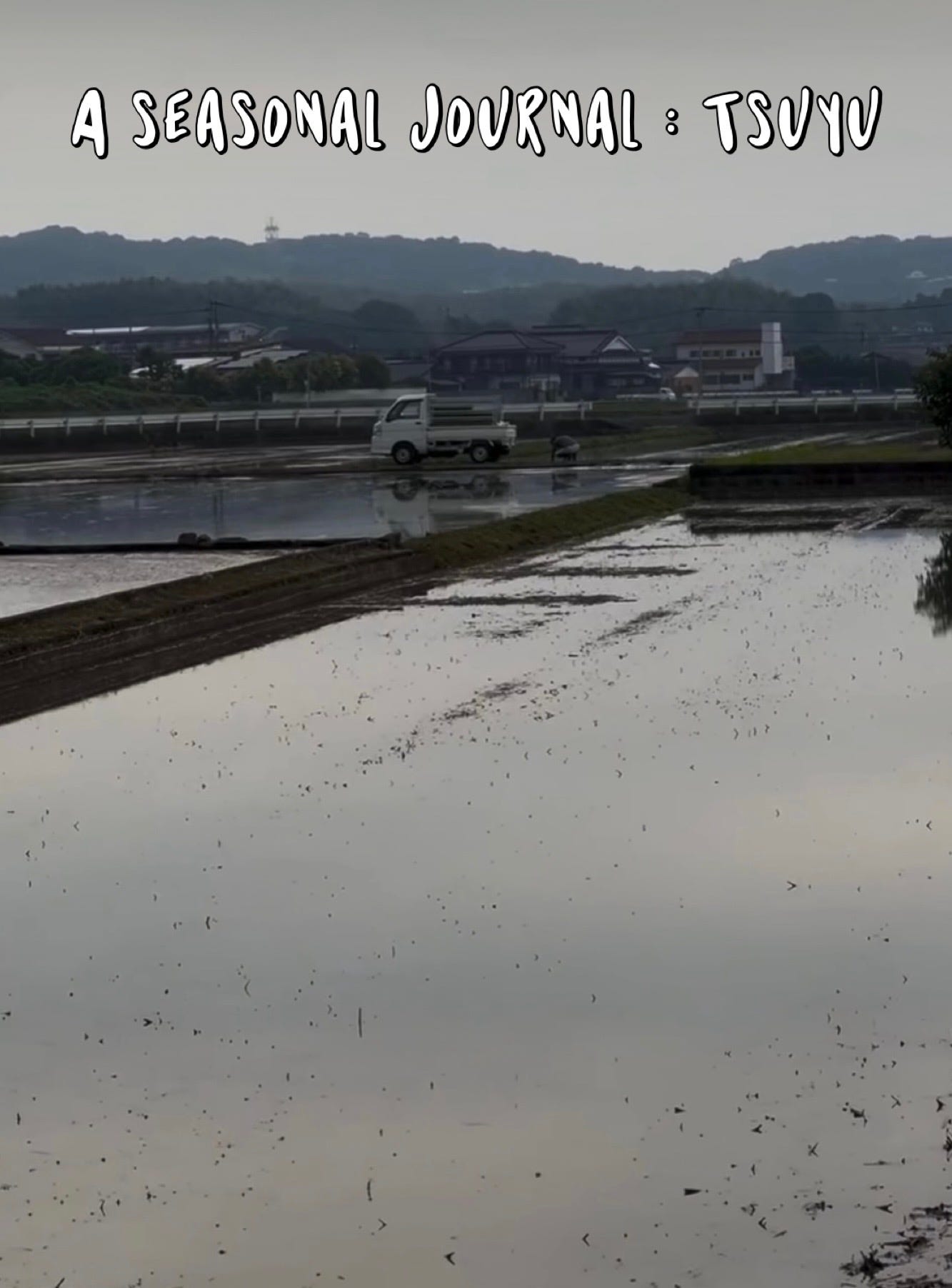
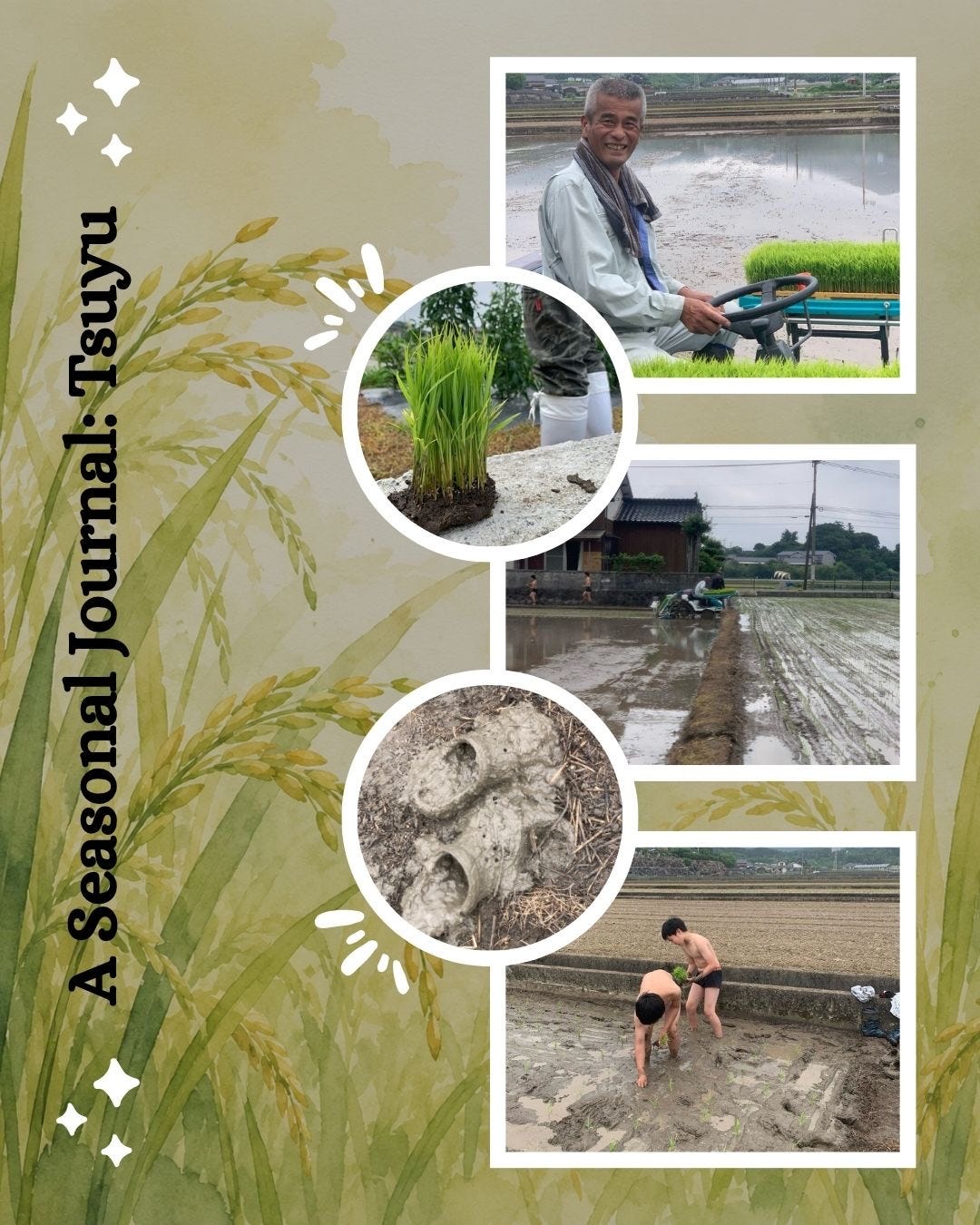
A Seasonal Journal- Tsuyu (the rainy season)


The Last of Spring

The glowing petals of sakura line up one by one along the riverbanks. Gradually the trees transform into vivid canopies of green. The temperature rises, the wind shifts, and suddenly haru ichiban blows through the valley — that first strong wind of late winter that awakens everything. The nanohana carpets the riversides in bright yellow. Then tulips, daffodils, narcissus, and a plethora of wildflowers join in riotous bursts throughout the landscape.

The Rain Arrives

And just as we are breathing into warm air and sunshine… the first drops begin to fall. At first just a few grey clouds drifting through. A few showers that don’t sodden the whole day. Then the intensity builds. Blue skies are no longer visible. Looking upward the skies are thick with layers of varying shades of grey. Thunderstorms wake us during the night.

And then comes the official announcement — because in Japan, tsuyu is officially announced. It’s almost ceremonial. We make sure that we have the necessary equipment. Umbrellas, rain boots, small towels tucked into bags to dry off with. Tsuyu has arrived. Spring colors have diluted into grey puddles.

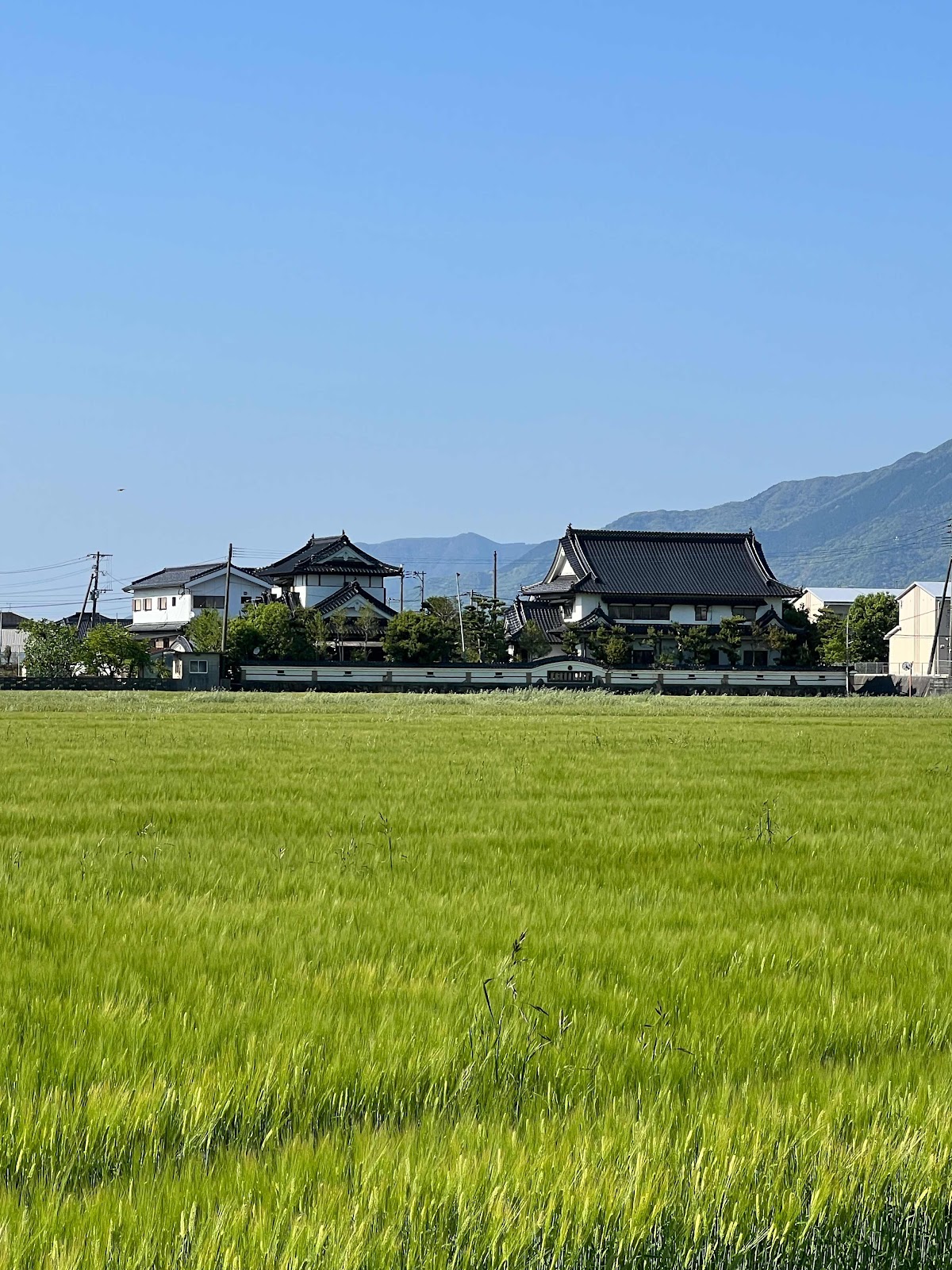
As rice farmers we welcome the rain as a necessity. And that part of it I love. The rich, strong, earthy smell of wet black mud in the fields. It brings the frogs with their symphonies. The duck families return. Water gliders skid around puddles. The dragonflies return. Flocks of swallows cruise low over the fields collecting mud for their nests. It’s amazing to watch them- precision twists and dives into the fields and seconds later they come racing straight up again.

We were blessed one year to have a family of tsubame build their nest right outside our genkan. We fought snakes and karasu — those huge black crows — to keep the babies safe. The second year they returned, but no matter what we did we couldn’t keep the predators away. The nest was destroyed and they never returned. The cycle of life.

The smell of rain clings to everything.

It’s also ajisai season. Big bright bushes of hydrangeas in vivid purples, blues, and pinks absolutely pop against the grey background. Thriving on roadsides, in gardens, interspersed among the hedgerows and gardens. They are absolutely my very favorite flowers and they bring such cheer to the season.

The Laundry Dilemma

There is one battle that every household fights during tsuyu — drying the laundry. Clothes dryers are not common in Japan. Newer washers have a built-in drying function but it takes two to three hours and uses a lot of electricity. Our washer is an older model, which means I hang the wash inside the house every day. Japanese washing machine capacity is small and almost everyone washes daily. Families with children wash several loads. No choice — coin laundry is expensive. Drying laundry in a humid house is a real challenge. I never feel like anything completely dries. My solution is to wash at night and hang everything in the tatami room where we sleep, with the AC running. Most things are dry by morning. The rest I just leave until they are.

It’s a challenge!

Taue — Rice Planting Season

Many people think of rainy weather as a time to cozy up with a book and a nice mug of coffee or tea. Not here. The rainy season continues to slip and slide right into taue — rice planting.

When June rolls in everyone is paying attention to the weather. Watching the sky for those big grey clouds. Praying for rain to fill the reservoirs and irrigation canals. We need to get the seedlings into the ground by end of June because they take about 130 days to mature. By then the temperatures are rising and will help the seedlings establish and thrive. It’s also important because typhoons typically arrive around the end of September or October. Although now, climate change has thrown a monkey wrench into things and we are experiencing earlier storms. When that happens the fields are in danger of being flattened — and we have to get out there with hand tools and harvest manually. The combine can’t harvest flattened rice.

But before we can even think of planting there is a lot of preparation that needs to be done. The irrigation canals need cleaning. Trash,(unfortunately yes, there is trash that gets into the canals) algae, leaves and other natural debris- that all needs to be cleaned out. The lanes are cleaned up- weeds are pulled and general grass cutting happens. The seedlings need to be ordered, machinery is readied.

My Father-in-Law’s Fields

It was my late father-in-law who taught me about rice planting. We lost him three years ago and miss him dearly. This season holds so many memories. He always let me drive the planting machine. As his Parkinson’s disease progressed I used to wheel him over to the fields and together we’d watch the activity. He’d shake his head and complain that my brother-in-law couldn’t keep a straight line while driving the planting machine — then he’d turn his head and wink at me and say — you should be driving. I’d kiss him on the forehead and say… I’m your driver now.

My mother and father in law many years ago.

My brother-in-law has taken over as “rice boss”— which is fine, he does well. His driving got better (haha). Me, I just love waking up early on planting day. The night before I get my gum boots, hat, farm pants, shirt, and bandanna out and set them by the genkan. Kind of like a kid expecting Christmas. My job now is hand planting the corners of the fields — those parts that are hard to reach with the machine. I swear sometimes I can hear my father-in-law’s voice while I’m knee deep in mud.

Planting Day

Everyone shows up and we always have way more help than we need, but that’s okay. At lunchtime we break for onigiri or store-bought bentos and cold tea. The camaraderie is wonderful. All of us sitting around under a pop-up tent on plastic chairs, empty crates, whatever is available. Boots covered in mud, sweaty, hair plastered to our heads, grinning and laughing and just enjoying the day.

My brother-in-law thinking about that cold “nama biru” (draft beer) he’s having after the work is done.

That evening, after a good shower, a hearty dinner and a nama biru everyone gets a good night’s sleep.

Planting is done. But that’s just the beginning. As tsuyu gradually comes to an end, the temperature rises and the seedlings take root and begin to grow as we roll on into summer.

From the Tsuyu Kitchen

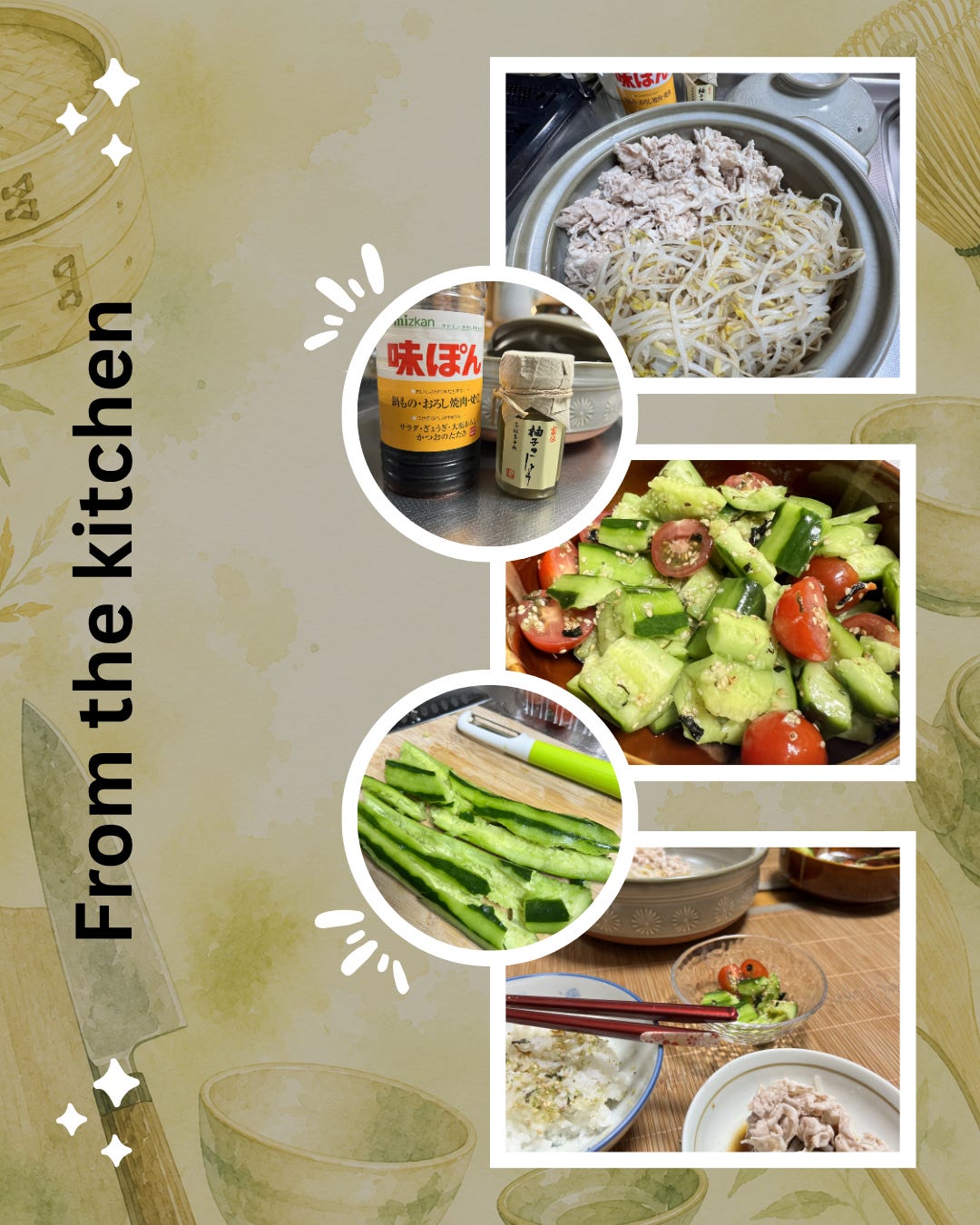
Tsuyu calls for simple, cooling food — things that don’t take long to prepare. Here are a few things from our table this time of year.

Smashed Cucumber Salad

Wash and peel your cucumbers leaving stripes of skin. Lightly pound with a kitchen mallet or press with a plate until cracked open. Roughly cut into bite-sized chunks. Add chopped cherry tomatoes. Toss with a light vinegar and oil dressing. Finish with a generous sprinkle of seasoned seaweed salt and mix everything together.

A pinch of furikake or toasted sesame with a little salt works beautifully as well.

Furikake is a dry Japanese seasoning blend meant for sprinkling — the name literally means “to sprinkle over.” It typically contains dried seaweed, sesame seeds, and salt. You’ll find it in every Japanese kitchen, usually sitting right next to the rice cooker!

Cold Pork and Moyashi

Boil thin slices of lean pork. Rinse in cold water and drain in a colander. Parboil the moyashi (bean sprouts), drain and leave to cool. Arrange both together on a large plate or bowl.

Dipping sauce: ponzu and yuzukosho.

Yuzukosho (柚子胡椒)

Is a paste made from yuzu citrus peel, green or red chili peppers, and salt. It’s fermented slightly which gives it a complex, punchy flavor — citrusy, spicy, salty all at once.

Don’t forget the nama biru!

Stay tuned for the next article in my Seasonal Journal Series! 

The Ache and the Blessing

 The other evening I walked around the fields. I felt rather wistful — missing my family.

We call Saipan home. Life there was lived over the span of about 40 years. We raised our kids, watched them build families of their own, and were blessed with grandchildren. It was a wonderful life — full of dear friends, countless memories, and evenings gathered after work at a beachside pub, toes in warm sand, a cold drink, and so much laughter.

So why did we ever move?

Saipan didn’t push us out all at once. It was a slow erosion. Medical services declined. Laws were passed prohibiting non-indigenous people from owning land. The economy contracted — wages low, jobs scarce, utilities eye-watering. Electricity runs over fifty cents per kilowatt hour on a tropical island that is always hot and humid. A monthly bill can reach three or four hundred dollars. Life there became harder and harder to sustain with any dignity or security.

So we came to Japan — to my husband’s hometown, a small rural village in Kyushu. And after fifteen years, we are still not fully settled — physically yes, but our hearts are still in Saipan. Tears are not uncommon. The current economy means we can’t even visit as often as we’d like. There is a constant ache we carry. And yet we are so thankful for FaceTime, WhatsApp groups, and social media — being able to share pictures and videos, to see faces, to stay woven into each other’s lives across the distance.

But we have to live here where we are. We can’t deconstruct. We can’t implode or fall apart. So we’ve had to learn to lean into the blessings.

And there are blessings. We are grateful for family here too — roots that go deep in this place. We plant rice and have found that leaning into the natural rhythm of life here has helped more than we expected.

We inherited a tiny home — one bedroom, a galley kitchen, a living and eating area, a small toilet room, a small bath, and an eight-mat tatami room. We’ve turned the bedroom into an office and library. We sleep on futons in the tatami room, tucking them away each morning so the space can breathe and be used through the day. When a small inheritance came to me after my parents passed, we used it to brighten the place up. It’s now light and cottage-like, and it is ours.

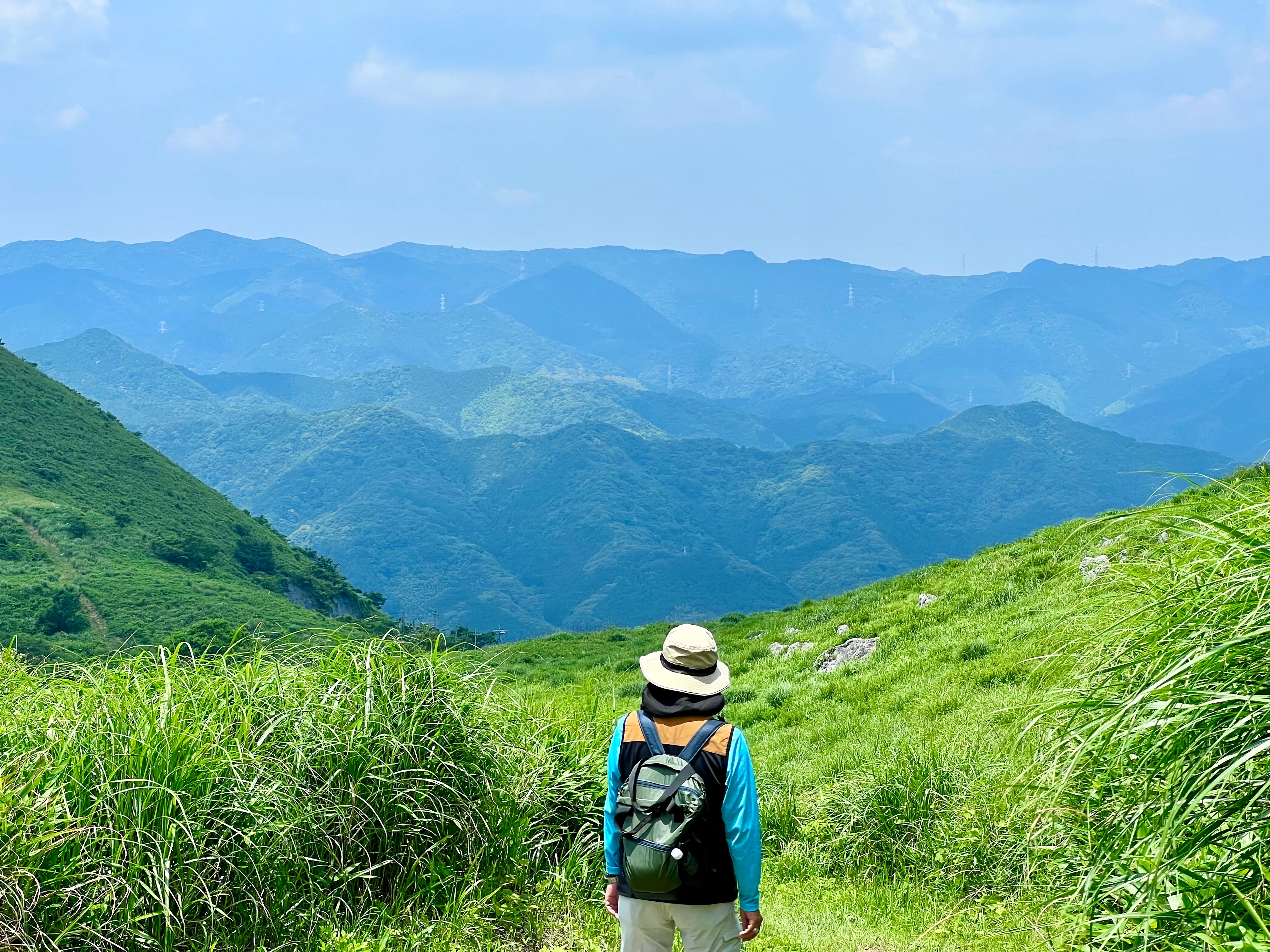
We’ve taken up trekking and nature walks. We go on small road trips, stopping at roadside stations, wandering through towns we’ve never seen. We bought used skis and started skiing — there’s a beginner-friendly hill not far away and it costs almost nothing. Rural Japan is rich with culture, mountains, rivers, forests, and historical sites. There is so much to enjoy here, if you plan a little and do some research.

The alternative is wasting away — becoming old, frail, and depressed. We can’t do that to our children.

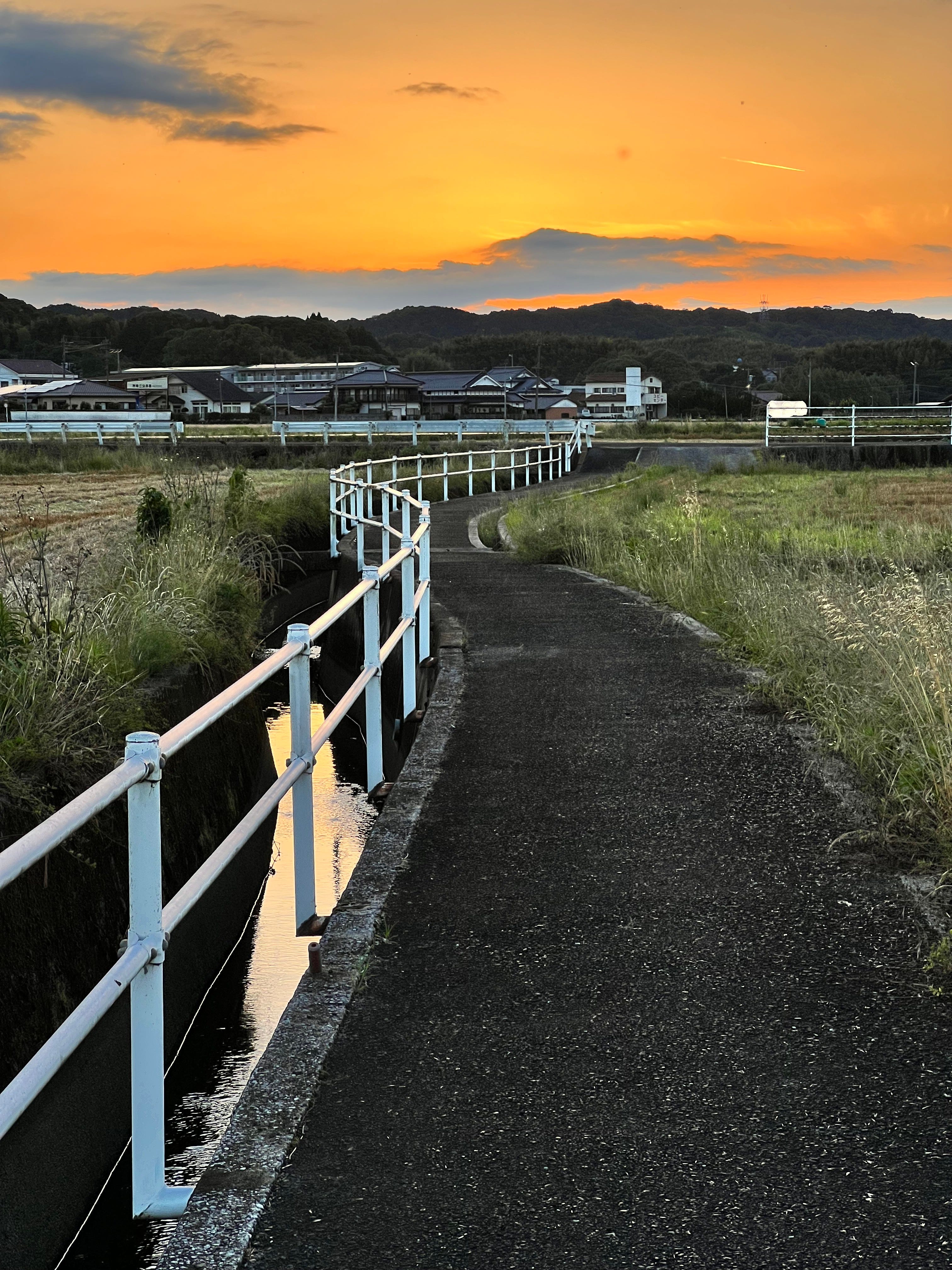
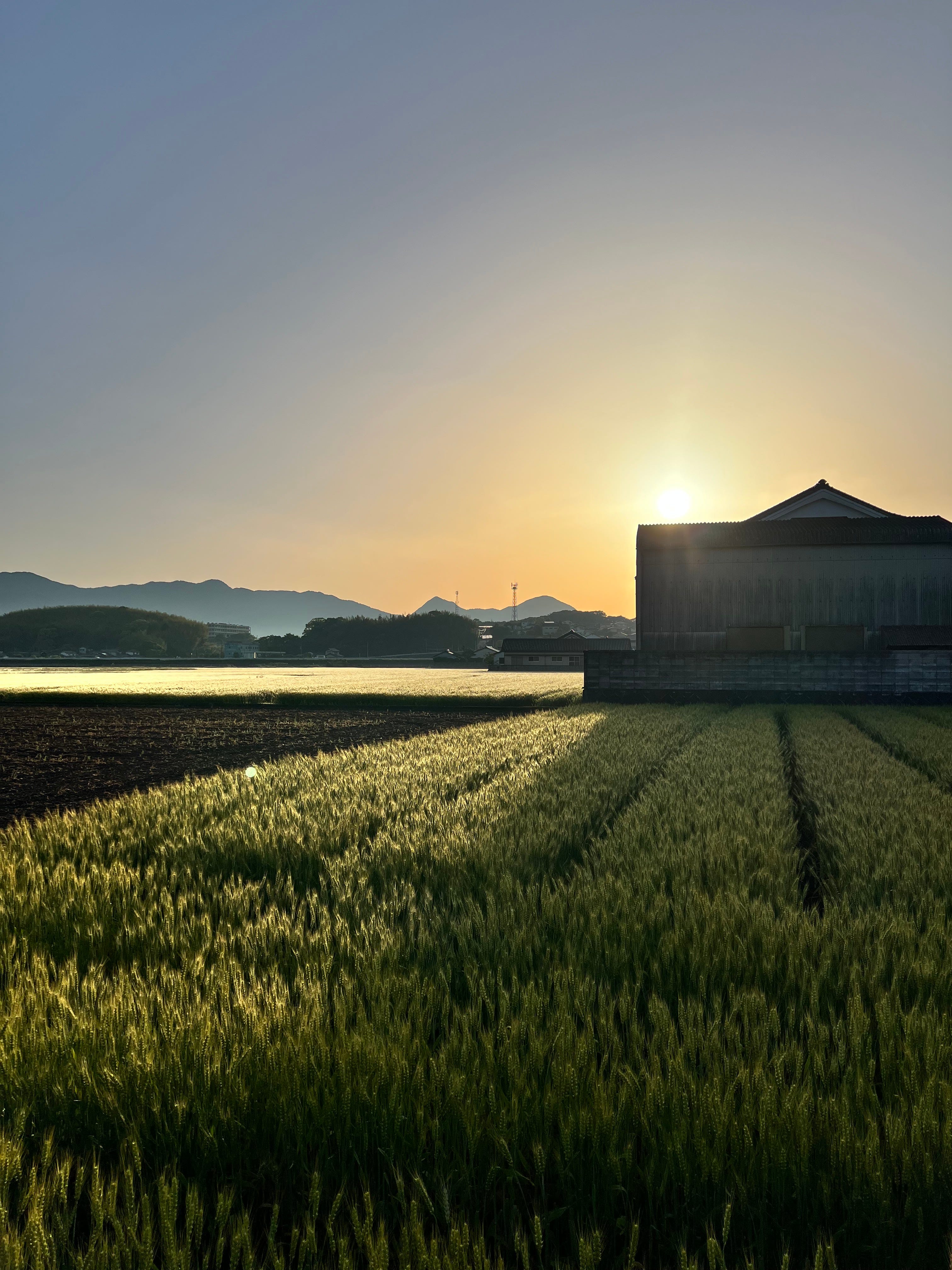
And so that evening, standing in the fields as the sky turned gold and the canal caught the last of the light, I thought: this is my life now. It isn’t the one I planned. But it is a life. Our life. And we are living it.

On Friendship and Lonliness

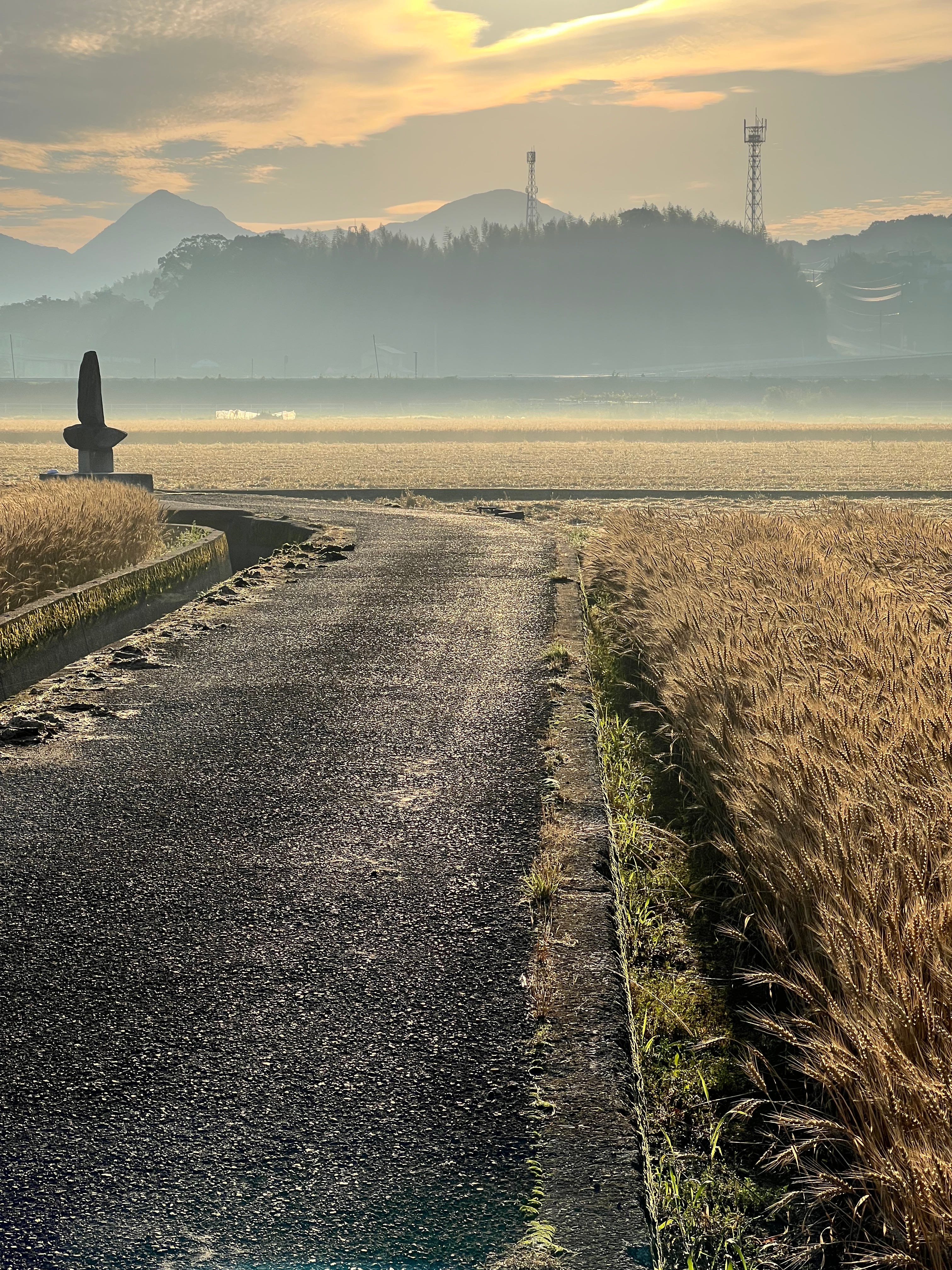
When we first moved to our tiny inherited home that sits between big old farmhouses on the edge of the rice fields, I noticed how quiet it was. I noticed the night filled with the symphony of hundreds of frogs that populated the flooded fields and I noticed Haruko.


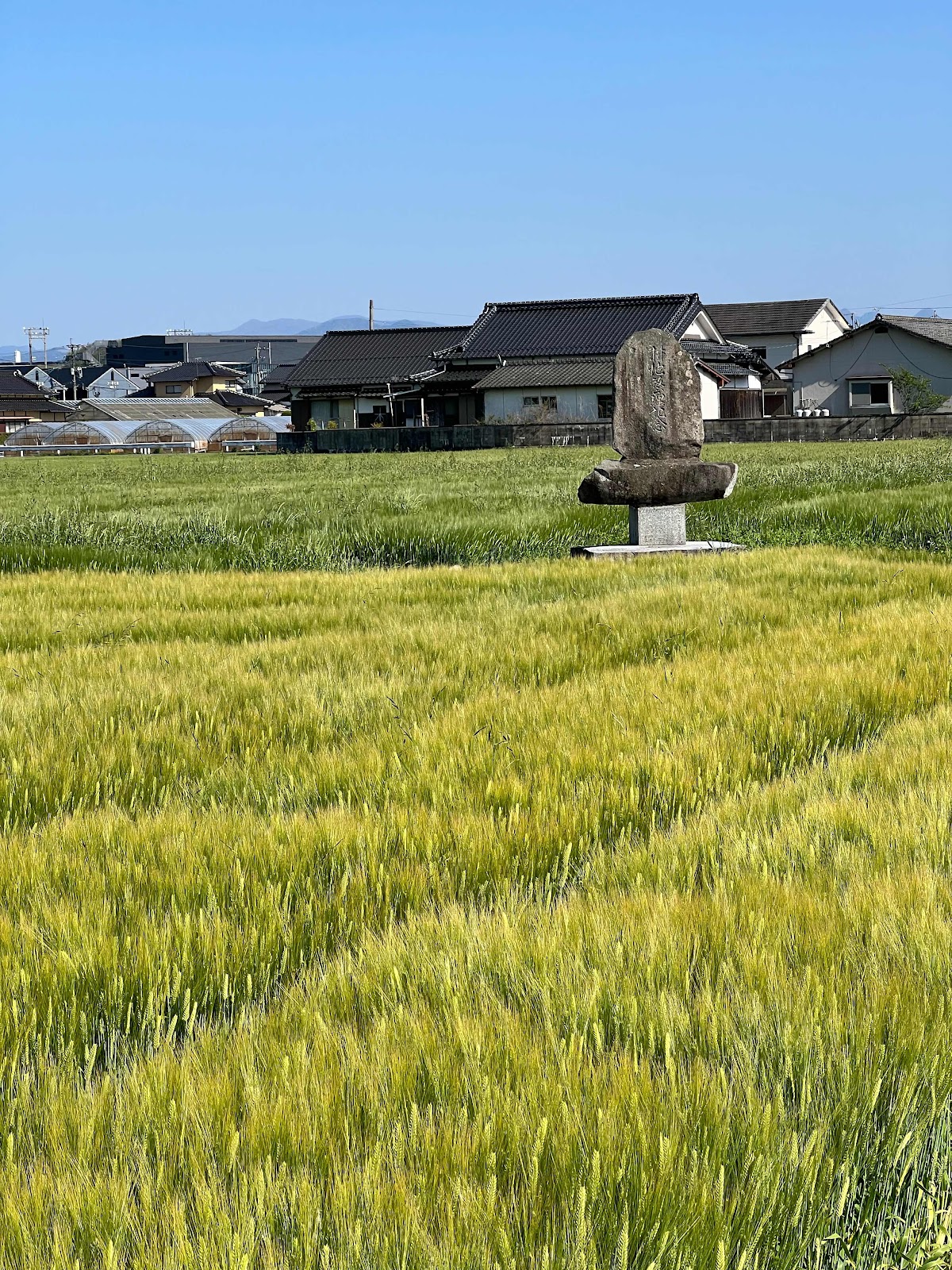
An old woman, two canes, making her slow way down the road toward the Koshin stone that sits guarding the rice fields. She’d settle there a while — just sitting, gazing out over the paddies — and then make her way back home to the big farmhouse across from the little playground.


I didn’t know her name then. I walked past and offered a gentle “konnichiwa” or whatever was appropriate for the time of day.

As the seasons turned and the years went by, I realized she couldn’t make it to the stone anymore. The playground bench was as far as she’d go now. She’d sit in her floral jacket, canes leaning beside her, watching the fields she could no longer quite reach.

Sometimes another granny would be sitting with her. Big sun bonnet, small frame. The two of them side by side like something out of a painting — the kind that makes you feel peaceful and a little sad at the same time.

They both watched me every time I passed.

I’d been living in this little village a few years by then — in the tiny home we inherited — and honestly, I hadn’t made many friends. Not for lack of warmth on anyone’s part. Japan is kind. But it’s also private in a way that takes some getting used to. Friendships here grow between people who’ve known each other since childhood, or sat beside each other in the same community class for twenty years. Even Japanese people will tell you — making friends here is not easy. You learn to be content with pleasant and surface. You find companionship in the fields and the dragonflies and the slow turning of the rice and the serenade of frogs.

The two old women sat on the playground bench and watched me walk past — I noticed, but I didn’t do anything about it. Not for a good long while.

Then one day I waved.

A small wave.

And they waved back.

After that it became our little ritual — I’d pass, we’d wave, I’d carry on. Until one late afternoon they beckoned me over, that unmistakable come here, come here gesture, patting the bench. They had scooted over to make room for me.

My heart was racing… I was sure they didn’t speak English so that would mean I’d have to speak Japanese- which I wasn’t very good at.

I sat down. They had so many questions.

Where are you from? Do you live here? How long? Your husband — is he Japanese? Really! Where did you both live before you before?

The same questions every visit. I came to know them like a familiar song. I’d answer carefully, apologize for my poor Japanese. They’d wave it away with great enthusiasm — Oh no, your Japanese is wonderful! We all knew it wasn’t true, and somehow that made it warmer.

This went on for a couple of years.

Then the other morning — early, maybe 8:30, mist still on the fields — I came around the corner and there was Haruko. Alone on the yellow bench. No sun bonnet beside her.

She waved me over.

But she didn’t ask me any questions this time.

She began to point. That ancient two-story with all the buildings attached — a friend had lived there. The one leaning on its little addition just to stay upright — another friend. The farmhouse with the big vegetable garden and the sweet little orchard. One by one she pointed, and one by one she told me. All gone now. All of them.

She cried. Quietly. And she said she was so lonely.

I didn’t think about it. I just put my arm around her shoulders and held her close, the way you’d hug a long time friend. She leaned right into me, this tiny woman, and we sat there together in the morning air.

She talked. I listened. She poured out memories the way people do when they’ve been holding them a long time and someone finally sits still long enough to receive them.

Eventually I said goodbye and walked on down the lane into the fields. And I couldn’t stop smiling.

I’d come out that morning just to walk. But God had other plans — a lonely soul who needed a shoulder, and it turned out, so did mine.


Tuesday, 29 April 2025

Morning Kettlebells and Cold Sweat: Why I’m Starting Anyway


This morning, I tried to start a kettlebell routine.

Just a few simple moves. Nothing heroic. But not even ten minutes in, I broke out in a cold sweat and had to sit down.


Not exactly the triumphant return to strength I had imagined.


But it did remind me: my body’s been through a lot. I’m not 25, and I’m not trying to be. I’m 64, and I’d like to keep moving — with steadiness, with dignity, and without falling over when I pick something up off the floor.


Lately, I’ve been thinking about how we care for our bodies as we get older.

We pay attention to diet, try to keep our minds sharp — but strength often slips away quietly.

I’m not talking about chasing abs. I mean real, everyday strength: carrying a bag of groceries, getting up from the floor, going for a walk after work instead of collapsing into a chair.


That’s why I started building something small — a warmup, a basic kettlebell routine, and a few notes of encouragement tucked in here and there. Nothing fancy. Just a way to stay grounded and steady.


I’m working on starting a journal to keep myself on track. Nothing stressful or too time consuming. 


After work today, I didn’t push myself to “make up for it.” I just took a long walk. No earbuds, no performance. Just the rhythm of walking, breathing, thinking.

That alone helped more than I expected.


I don’t have a master plan. Just this sense that I want to keep showing up for my own life — a little stronger, a little steadier, and maybe even a little kinder to myself.


P.S. If you’ve been feeling like you’re starting late or starting slow — you’re not alone. Start anyway.

Wednesday, 23 April 2025

Emotions and the Desert Fathers: A Sacred Struggle Toward Theosis


I woke up this morning with a raging headache. I mean—really? Waking up with a headache? I made my way to the kitchen, the comforting aroma of coffee picking me up a bit, but as soon as I looked out the window, dark and grey skies pulled me down again. It was just one of those mornings that felt emotionally heavy right from the start.

I’ve been thinking a lot lately about how we handle emotions, especially on days like this—when we wake up tired, heavy-hearted, or just off. You know the kind of morning I mean. And as strange as it may sound, I found unexpected comfort in the teachings of the Desert Fathers.

These early Christian monks had such a deep, nuanced understanding of the emotional life—not in the modern psychological sense, but as part of our spiritual journey. They didn’t believe in pretending our emotions weren’t there or shoving them down. Instead, they invited us to recognize them, work with them, and ultimately let Christ transform them.


Emotions as Part of the Journey

The Desert Fathers saw emotions as powerful forces. They used words like energeiai to describe the energies of the soul. When these energies got twisted, they became passions (pathē), leading us away from God. But those same emotions, when healed and redirected, could actually become fuel for our journey back to Him.

Abba Poemen once said:

“Do not give your heart to that which does not satisfy your heart.”

That one line stops me in my tracks. How often do we chase after things that promise comfort or peace but leave us emptier than before? The Fathers weren’t scolding—they were inviting us to a deeper honesty, to discern what truly feeds our soul.

Inner Stillness, Not Emotional Shutdown

I used to think the spiritual life meant becoming emotionally blank—calm, unbothered, unfazed. But that’s not what the Fathers meant by apatheia. It’s not about numbing out. It’s about finding a deeper stillness beneath the waves of our emotions.

Evagrius Ponticus explained:

“A man in a state of apatheia is not someone without feeling, but someone who is no longer under the compulsion of the passions.”

It’s not that we stop feeling. It’s that we learn to feel rightly, rooted in God’s presence. That shift in perspective was huge for me. It made space for all my emotions without letting them run the show.

The Gift of Tears

Let’s talk about tears for a moment. I cry a lot, and honestly, I don’t always know why. I’m not embarrassed by it—not anymore, especially in prayer. But sometimes, the sadness just lingers. And I’ve come to believe that maybe these tears are prayers themselves, carrying the aches I can’t quite put into words.

The Desert Fathers didn’t see tears as weakness. They saw them as grace.

Holy tears were a healing gift—an outward sign of an inward softening. They didn’t cry to feel sorry for themselves. They wept because love was breaking through the hard places of their hearts.

Abba Isaac the Syrian once said:

“More than all things, love silence. It brings you a fruit that the tongue cannot describe.”

In silence, we come face to face with our emotions. And sometimes, the tears come too. Not as failure, but as the beginning of healing.

Emotions as a Path to Christ

What touches me most is how the Desert Fathers believed every emotion—yes, even the hard and messy ones—could be transfigured.

Anger? It can become holy zeal. Sorrow? It can turn into repentance. Fear? It can be refined into awe and reverence. Even our deepest longings can be redirected into desire for God.

Abba Macarius said:

“If we remember the wrongs that men have done us, our prayers are not acceptable to God.”

They weren’t offering lofty ideals—they were pointing to real transformation. A kind of alchemy of the heart, where God takes our raw, honest feelings and slowly turns them into something beautiful.


What This Means for Us

The Fathers are like spiritual black coffee: strong, no sugar, and they’ll wake up your soul.

They remind us that emotions aren’t something to fear or suppress. They’re invitations—holy echoes that can lead us to deeper healing, if we’re willing to listen and bring them into the light of Christ.

So the next time your heart feels heavy, don’t rush past it. Sit with it. Pray with it. Let the silence speak, and let your tears fall if they need to. This, too, is prayer.

Because the goal isn’t to have perfect peace or constant joy. The goal is to become real—to be made whole—and to let Christ meet us exactly where we are, even in our aches and uncertainties.


May we all learn to sit with our hearts, let Christ into the quiet, and allow our emotions to be not a burden, but a blessing on the path to Him.

Summer in Japan!

  I remember the first time I came to Japan during the summer. It was August, the season of Obon. My husband’s biological father had passed ...